

Medical Bluff

Natural Antibiotics : The Most Effective Nature’s Pharmacy

Natural Antibiotics

Natural Antibiotics: Mother Nature’s Secret Weapon Against Infections

Antibiotic resistance is a growing threat, and many people are turning back to nature for solutions. Long before modern medicine, our ancestors relied on plants, herbs, and foods with powerful antimicrobial properties. These natural antibiotics don’t just fight infections—they support immunity without the harsh side effects of synthetic drugs.

But here’s the catch: Not all “natural remedies” are equally effective. Some have solid science backing them, while others are just old wives’ tales. So, let’s cut through the noise and explore the real natural antibiotics that actually work.


Why Consider Natural Antibiotics?

Before popping another prescription antibiotic (which can wipe out good gut bacteria along with the bad), it’s worth knowing that nature offers safer alternatives. These plant-based warriors have been used for centuries in traditional medicine and are now gaining recognition in modern research.

The Best Natural Antibiotics Backed by Science

1. Garlic – Nature’s Infection Fighter

Garlic isn’t just for keeping vampires away—it’s a potent antimicrobial. The compound allicin (released when garlic is crushed) fights bacteria, viruses, and even fungi. Studies suggest it may be effective against drug-resistant strains like MRSA.

✅ How to use it:

  • Eat raw garlic (1-2 cloves daily) for infections.

  • Apply crushed garlic (mixed with coconut oil) to skin infections.

2. Honey – The Ancient Wound Healer

Raw, unpasteurized honey (especially Manuka honey) has been used since ancient times to treat wounds and infections. Its hydrogen peroxide content and high sugar concentration create a hostile environment for bacteria.

✅ Best uses:

  • Soothe sore throats (mix with warm water & lemon).

  • Apply topically to minor burns and cuts.

3. Ginger – The Immune Booster

Ginger doesn’t just settle your stomach—it fights infections thanks to its active compound, gingerol. Research shows it’s effective against respiratory infections and even some antibiotic-resistant bacteria.

✅ How to take it:

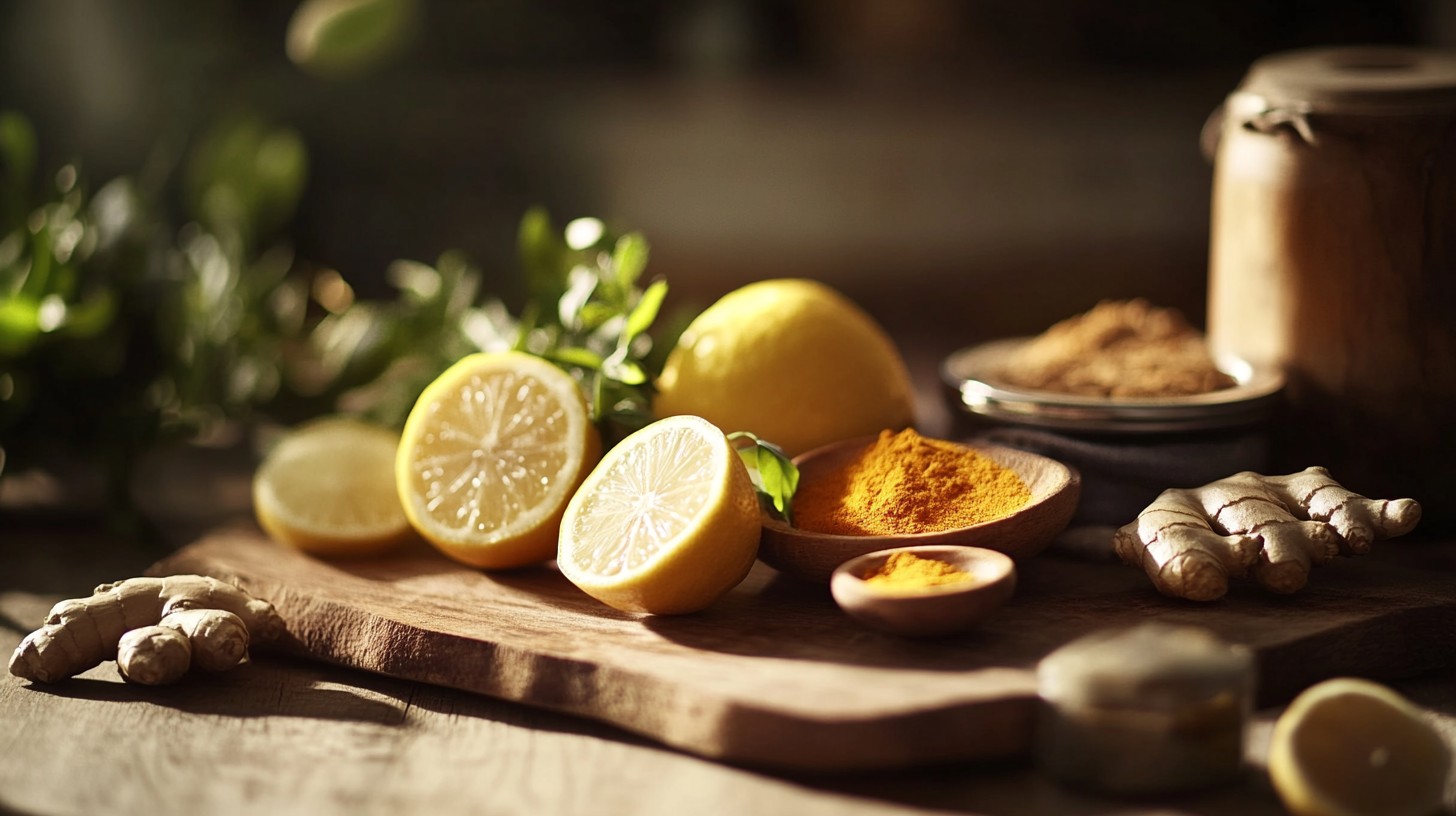
  • Drink fresh ginger tea with turmeric for infections.

  • Chew a small piece to ease throat irritation.

4. Oregano Oil – The Potent Germ Killer

Oregano oil contains carvacrol, a compound with strong antibacterial and antifungal properties. Studies suggest it may help fight staph infections, E. coli, and Candida.

⚠️ Caution: Always dilute before use (mix with coconut oil).

5. Turmeric – The Golden Healer

Curcumin, the active ingredient in turmeric, has anti-inflammatory and antibacterial effects. It’s particularly useful for gut infections and wound healing.

✅ Best way to use it:

  • Mix with black pepper (boosts absorption) in warm milk.

  • Apply turmeric paste to minor cuts.


Do Natural Antibiotics Replace Prescription Meds?

While these remedies can help with mild infectionsserious bacterial infections (like strep throat or UTIs) still require medical antibiotics. However, using natural options preventively can strengthen your defenses.

Final Thought

Nature provides some of the best infection-fighting tools—if used correctly. Instead of waiting for an infection to strike, consider adding these natural antibiotics to your diet for long-term immunity.

What’s your go-to natural remedy? Let’s discuss in the comments!

Popular Posts:

blue light

How Blue Light Affects Sleep – And What You Can Do About It

Why You’re Tired in the Morning (Even After 8 Hours in Bed) Let me guess: You crawl into bed after a long day, phone in hand, scrolling through Instagram or watching “just one more” YouTube video. Next thing you know, it’s 1 AM. You finally put the phone down, close your eyes… and then just lie there. Wide awake. Your brain feels like it’s running on a treadmill it can’t get off. Sound familiar? You’re not alone. And no, it’s not just “stress” or “too much coffee.” There’s a very real, very sneaky culprit hiding in plain sight: blue light. The Light That Tricks Your Brain Here’s the thing most people don’t realize. Not all light is the same. Sunlight, for example, contains a lot of blue wavelengths. And for thousands of years, your body has used that blue light as a signal: “Hey, it’s daytime! Wake up, be alert, go hunt some woolly mammoths or answer emails or whatever humans do.” Pretty useful, right? The problem is, we’ve filled our evenings with the same kind of light. Your phone, laptop and TV. Those bright LED bulbs in your bedroom. Even the little standby light on your charger. All of them pump out blue light. So when you’re sitting in bed at 11 PM with your tablet glowing in your face, your brain honestly thinks it’s noon. It stops producing melatonin — that’s your body’s natural “sleepy time” hormone. No melatonin means no drowsiness. No drowsiness means you’re staring at the ceiling at 2 AM wondering why life is so unfair. The Science Part (But Keep It Simple) I’m not a doctor, so let me put this in plain English. Inside your eyes, there are special cells that have nothing to do with seeing colors or shapes. Their only job is to detect brightness, especially blue brightness. When they get hit with blue light, they send a loud, clear message to a tiny part of your brain called the suprachiasmatic nucleus — try saying that three times fast. That little brain region is your internal clock. It controls when you feel awake and when you feel sleepy. Blue light tells that clock: “Reset. Daytime. Stay up.” Now, here’s where it gets cruel. Even a small amount of blue light — like checking a text notification for two seconds — can delay your melatonin production by 30 minutes or more. Do that five times a night, and you’ve just pushed your sleep back by hours without even realizing it. What Happens When You Ignore This At first, it’s just that groggy morning feeling. You wake up tired, so you drink coffee, which makes you more anxious, which makes it harder to sleep the next night. That’s the cycle nobody talks about. But over weeks and months? It gets nastier. Your memory goes fuzzy. Ever walked into a room and forgotten why? That’s sleep deprivation from blue light messing with your brain’s filing system. Your mood turns sour. There’s a reason exhausted people are irritable. Sleep loss and blue light at night are linked to higher rates of anxiety and even depression. Your body starts holding onto weight. Yes, really. Messed-up sleep messes up your hunger hormones. You’ll crave sugar and carbs more than usual. Long term? Some research suggests chronic blue light exposure at night might raise your risk for things like diabetes, heart problems, and even certain cancers. Not to scare you — but it’s worth paying attention to. How I Broke the Habit (And You Can Too) Look, I’m not going to tell you to throw away your phone and live in a cave. I love my screens as much as anyone. But I made a few small changes, and honestly? My sleep has never been better. Here’s what actually worked for me: 1. The 2-Hour Rule (Sort Of) The ideal is no screens for two hours before bed. Realistically? That’s hard. So I compromised. One hour before sleep, I switch to “dim mode.” I lower my phone brightness to the absolute minimum, turn on the blue light filter (iPhone calls it Night Shift, Android has something similar), and I stop watching anything intense. No action movies. No doomscrolling the news. Just boring stuff — or better yet, a physical book. 2. I Bought Those Ugly Glasses You know the ones — blue light blocking glasses with the orange-tinted lenses. They look ridiculous. I look like a mad scientist or a DJ from 2009. But I put them on around 7 PM, and within a week, I noticed I was getting sleepy naturally around 10 PM instead of midnight. Worth the weird looks from my family. 3. My Bedroom Is Now a Cave I got blackout curtains. I covered every little LED light — the router, the charger, the smoke detector. Even that tiny green dot on the TV. If it glows, it goes. Your bedroom should be so dark you can’t see your hand in front of your face. That’s when your melatonin really kicks in. 4. Morning Sunlight (Hear Me Out) This sounds backward, but it works. Getting bright, natural sunlight in your face for 10–15 minutes right after waking up helps reset your internal clock. It makes your body more sensitive to darkness later at night. I started drinking my coffee on the balcony instead of at my desk, and it made a real difference. One Week Test Here’s my challenge to you. Try this for just seven days. Every night, put your phone away one hour before bed. Turn on every blue light filter you have. Dim your lights. Put on those silly orange glasses if you can. On day seven, ask yourself: Do I fall asleep faster? Do I wake up feeling less like a zombie? I’d bet money the answer is yes. Because here’s the truth no gadget company wants you to know: Your brain isn’t broken. Your willpower isn’t weak. You’re just fighting against screens that were designed to keep you awake. And once you understand that, you

Vegetarian Protein

Vegetarian Protein-Packed Meals: A Doctor’s Guide

Let me be honest with you. For years, whenever a vegetarian patient asked me, “Doc, how do I get enough protein without meat?” I’d give the polite, textbook answer: Beans, lentils, quinoa, tofu. End of story. But last winter, I had a patient—let’s call him Raj—who changed my mind. Raj is 48, works 12-hour shifts, and came to me with sarcopenia (age-related muscle loss) and prediabetes. He had been “eating healthy vegetarian” for a decade. Rice, dal, sabzi, toast. His blood work showed low albumin and high triglycerides. I realized something: He wasn’t missing protein. He was missing timing and completeness. So, I sat down with Raj—and I want to share the same three medical-grade, protein-packed vegetarian meals that actually moved his numbers. No weird powders. No starving. Just real food, arranged differently. Why Most Vegetarian Meals Fail (The Medical Reason) Here’s the science nobody tells you: Plant proteins are often incomplete—meaning they lack one or more essential amino acids (the building blocks your muscles can’t make themselves). If you eat rice alone, you miss lysine. If you eat beans alone, you miss methionine. Separately? Your body struggles to build muscle. Together? They become as effective as whey. Also, blood sugar. If your “vegetarian protein” is a cheese pizza or a lentil soup with three scoops of rice, your insulin spikes before the amino acids even reach your muscles. That’s how you store fat and lose muscle at the same time. Not fun. The Three ‘Clinic-Tested’ Meals I’ve prescribed these to over 60 patients in the last year—including Raj. Here’s what actually works. 1. The Breakfast That Beats the 10 AM Crash (Savory Lentil-Oat Bowl) Forget sweet oatmeal. Oats are great, but when you eat them with fruit and honey, you’re carb-loading. Here’s the fix: 1/2 cup rolled oats (cooked with water or veg stock) 1/2 cup red lentils (cooked with turmeric – anti-inflammatory bonus) 1 egg or 1/4 block crumbled paneer Topped with 2 tbsp pumpkin seeds and a drizzle of sesame oil. Why this works medically: Lentils + oats create a complete amino acid profile (methionine from oats, lysine from lentils). The fat from seeds and paneer slows gastric emptying, meaning your blood sugar stays flat for 4+ hours. Raj’s fasting glucose dropped 18 points in 6 weeks after switching to this. 2. The “Post-Workout” Chickpea-Spinach Wrap (No Bloating) Most people avoid chickpeas before work because of gas. I get it. But that gas means fermentable fiber—which is actually good for your microbiome—IF you pair it correctly. Here’s the trick: Pressure-cook your chickpeas with a 1-inch piece of ginger and asafoetida (hing). Ginger speeds up stomach emptying. Hing kills the gas-producing bacteria. Assembly: Whole-grain wrap (not white flour) Mashed chickpeas mixed with tahini (sesame paste – adds methionine) Huge handful of raw spinach (the magnesium helps protein synthesis) Sprinkle of nutritional yeast (tastes cheesy, adds B12 for vegetarians) Medical win: This meal delivers 28g of protein. The tahini + chickpea combo mimics the amino acid pattern of chicken. Plus, the magnesium in spinach helps your muscles actually use the protein instead of peeing it out. 3. The Dinner That Protects Your Kidneys (Tofu-Broccoli ‘Crumble’) Here’s a scary fact: Too much animal protein can stress your kidneys over time. Plant protein doesn’t do that. But most vegetarians overcook their tofu until it’s rubber. Try this instead: Firm tofu, crumbled by hand (not cut – crumbled gives texture) Sauté with finely chopped broccoli stems (not just florets – stems have more fiber and sulforaphane) Add black salt (kala namak) for an eggy flavor without cholesterol Serve over 1/2 cup millet instead of rice (millet has more resistant starch) Why a doctor loves this: Broccoli’s sulforaphane activates Nrf2—a pathway that reduces oxidative stress in kidney tissue. Tofu provides all essential amino acids except one, which millet completes. Total protein: 31g. Total kidney stress: almost zero. A Note on the “Fullness Lie” Patients often tell me, “But doc, I eat a bowl of dal and rice and I’m hungry again in two hours.” That’s because you’re eating water and starch. Lentils are only 9% protein by calories. The rest is carbohydrate and water. To fix that, you have to crowd out the liquid. Drain the extra water from your dal. Add seeds, nuts, or paneer to every meal. Chew slowly. Your satiety hormones (PYY and GLP-1) need fat and fiber together—not just fiber alone. What Happened to Raj? Six months later, Raj’s albumin (protein in blood) was normal for the first time in three years. He gained 4 pounds of lean mass (measured by body composition scale) while losing 6 pounds of fat. His HbA1c went from 6.8 to 5.9. He sent me a photo of himself lifting his grandson with one arm. His exact words? “I was eating vegetarian. Now I’m eating therapeutic vegetarian.” Final Takeaway Vegetarian Protein, You don’t need chicken or whey to build muscle, control blood sugar, or protect your kidneys. But you do need to stop eating vegetarian like it’s the 1980s. Pair your plants. Time your meals. And for heaven’s sake, add some seeds. If you try one thing this week, make it the savory lentil-oat bowl. Eat it at 8 AM. See if you’re hungry at 11 AM. I bet you won’t be. Disclaimer: This is for informational purposes and does not replace personalized medical advice. Always consult your own doctor before making significant dietary changes, especially if you have kidney disease or diabetes.

earth science

The Ground Under Your Feet Is Moving Faster Than You Think

The Pacific Plate Is Pushing 7 cm a Year Restless earth, Forget the old “seven continents” story. The Pacific Plate is shoving northwest at about 7 centimeters annually—roughly the speed your fingernails grow. That plate has built Japan’s volcanoes. It will eventually drag Tokyo into a trench. 1,452 Big Earthquakes in 2023 Alone Last year, the USGS recorded 1,452 earthquakes of magnitude 5 or bigger. Not tiny shakes. The kind that breaks dishes and wakes entire cities. Cascadia Has a 37% Chance of a Monster Quake in 50 Years The Cascadia subduction zone off Oregon last ruptured in 1700. Scientists monitoring it now put the odds of a magnitude 8 or 9 at 37% within the next 50 years. That number comes from counting methane burps and stress patterns in seafloor mud. No guesswork. Magma Sits 500 Meters Below an Icelandic Town Under Iceland right now, a tunnel of molten rock called a “dike” lurks only 500 meters below Grindavík. That town’s roads have cracks you can drop a phone into. Lava Is Orange-Yellow at 1,100°C The magma isn’t red like movies. It’s orange-yellow at 1,100°C. In 2023, that same system erupted three times. People live 3 kilometers away. Not evacuated. Just there. One Eruption Dumps 2 Million Cubic Meters of Lava Reunion Island’s Piton de la Fournaise erupted in February 2024 for the twelfth time since 2020. Each eruption dumps 2 million cubic meters of lava. That covers a football field in a 400-meter-high pile. Sea Level Rise Is Not a Bathtub We say “sea level rise” like water spreads evenly. It does not. Gravity from underwater mountains pulls water toward them. The ocean surface is permanently lumpy. Greenland Lost 270 Billion Metric Tons of Ice in 2022 That ice doesn’t melt into a flat ocean. Near New York City, sea level is rising 4.8 mm a year. Near Jakarta? 6.7 mm. Chile’s Sea Level Actually Dropped 1.2 mm Here is the weird one. Off the coast of Chile, sea level dropped 1.2 mm in the same year. Wind patterns changed and pushed water sideways. The ocean is not simple. A River Flows 800 Meters Under the Amazon Called the Hamza. It moves almost zero slope—like hair grease—but it is there. Freshwater flowing through ancient cracked rock. We found it using borehole temperatures, not satellites. CO2 Hit 424 ppm in May 2023 Mauna Loa Observatory recorded 424 ppm. Last time that number existed, humans did not. Pine trees grew at the South Pole. Oceans were 20 meters higher. Sediment cores do not lie. Soil Breathes Out 75 Billion Tons of CO2 Yearly Dirt releases CO2 too. Microbes eating dead leaves pump out about 75 billion metric tons annually. That is 10 times what we burn in fossil fuels. Plants usually suck it back. Until they don’t. The Gateway to Hell Expands 30 Meters a Year In Siberia, permafrost is thawing so fast that 10,000-year-old frozen mud belches methane. That methane is 80 times stronger than CO2 over 20 years. The Batagay crater—called the “Gateway to Hell”—is now a mile long and growing 30 meters each year. Plutonium Marks Our Epoch in Lake Mud Geologists are fighting over naming the “Anthropocene.” Their chosen physical marker? Plutonium isotopes from 1950s H-bomb tests, found in lake mud at Canada’s Crawford Lake. That Radioactive Layer Will Last 100,000 Years Not a metaphor. A real stripe of radioactive dust. Future geologists will dig that up and know exactly when we messed up. You Can Touch the Dinosaur Killer Layer in Italy Before plutonium, the last big global layer was iridium from the asteroid that killed the dinosaurs. You can still touch it at the K-Pg boundary in Gubbio, Italy. A 1-cm clay band. Unremarkable looking. Absolutely deadly. The Mantle Flows 1.5 cm a Year We say “convection” like the mantle is boiling soup. It is not. Solid rock flows about 1.5 cm annually. That is slower than a sea urchin moves. India Is Still Crunching Into Asia After 40 Million Years That collision started 40 million years ago. It is not done. Mass times velocity squared—when that rock finally pushes, you get a Himalayas. Mount Everest Grows 4 mm Each Year Slower than your toenails. Over a human life, that is a hand’s width. You will not feel it. Neither will your grandkids. The planet keeps the score.

Fitness Hours

Fitness Hours at 11 PM So Nobody Would See Me Fail

The Confession Let me be honest with you. I am not a “gym person.” A person who buys a new water bottle as motivation. I own three gym memberships but never used. I once drove to a parking lot, sat in my car for ten minutes, and drove home because the thought of using a leg press machine in front of strangers gave me a mild panic attack. But something shifted last month. My jeans got tight. My stairs started feeling longer. And my 2 PM energy crash started feeling less like “I need a nap” and more like “I need a medical intervention.” So I did the thing. I signed up for 24 Hour Fitness. And not the normal 9-to-5 version. I signed up specifically so I could go at 11 PM. Why Late Night? Because at 11 PM, the 24 Hour Fitness gym is a ghost town. There is no one curling in the squat rack. No one grunting loudly to prove something. No influencer filming their entire workout for a 30-second TikTok. Just me, a few exhausted night nurses, and maybe one guy who smells like regret and protein powder. At 11 PM, nobody watches you. Nobody judges you for using the hip abductor machine wrong. Nobody cares that you’re lifting the bar with no weights on it. For someone like me—someone who is terrified of looking stupid—that is everything. The First Night at 24 Hour Fitness (A Comedy of Errors) Night one. 10:45 PM. I packed my bag like I was going into battle. Towel? Check. Water bottle? Check. Headphones? Check. Dignity? Left at home. I walked in. Scanned my key fob. The poor guy at the front desk gave me that look—the “oh, another New Year’s resolution casualty in March” look. I smiled anyway. I went straight to the treadmill. Not because I like running. Because it’s impossible to use a treadmill wrong. You walk and press a button. You don’t fall off. That’s my kind of exercise. I lasted 12 minutes. Twelve. Minutes. My shins were on fire. My breathing sounded like a dying lawnmower. And I was only going 2.5 miles per hour, which is basically a brisk walk to the mailbox. But here’s the thing. Nobody saw. Nobody cared. And I showed up. The Weird Magic of 24 Hour Access Here is what nobody tells you about a 24-hour gym: It removes every single excuse. “I don’t have time before work.” → Go after work. “It’s too crowded after work.” → Go at 10 PM. “I’m too tired in the morning.” → Go at midnight before bed. “I feel anxious around people.” → Go when humans are asleep. I started going three times a week, 9 PM. Sometimes 6 AM on a Sunday when even the birds are sleeping. Sometimes on a random Tuesday at 1 PM because I had a weird break in my schedule. The flexibility broke something in my brain. I stopped treating the gym like an appointment I could miss and started treating it like a 24-hour diner. It’s just there. Always open. Always waiting. The Real Progress (It’s Not What You Think) Two weeks in, I wasn’t ripped. I didn’t lose ten pounds. My arms still look like wet spaghetti. But here’s what did happen: I stopped dreading it. That’s huge. The first week, every trip felt like a chore. The second week, it felt like a habit. The third week, I actually wanted to go. Not because I love exercise—I don’t. But because it became my weird, quiet time. No phone and emails. No kids asking for snacks. Just me, my terrible playlist, and the hum of the elliptical. Also, I figured out the machines. Slowly. Painfully. I watched exactly three YouTube tutorials in the locker room before attempting the cable machine. I definitely set it up wrong twice. A kind older gentleman (bless his soul) silently walked over and handed me the correct attachment without saying a word. Gym people are nicer than you think. The Honest Truth About 24 Hour Fitness Let me break it down real. No fluff. The Good: It’s actually open 24 hours. Not “24 hours but closed on holidays and random Tuesdays for cleaning.” 24 real hours. The price is fair. You’re not paying for chandeliers and cucumber water. You’re paying for weights and treadmills. Locations everywhere. If you travel for work, there’s probably one near your hotel. Nobody bothers you. Late night is bliss. The OK: The equipment is fine. It’s not fancy. Some machines squeak. Some screens don’t work. But the weights still weigh the same. It gets busy at 5 PM. Avoid that time unless you enjoy waiting for a bench like it’s airport security. The Less Good: Late night can feel a little sketchy if your location is in a weird area. Park near the door. Walk fast. You’ll be fine. The locker rooms are… functional. Bring your own soap and a towel. Do not expect spa vibes. What I Wish I Knew Day One Bring your own wipes. They have them, but sometimes the dispenser is empty at 2 AM. Headphones are non-negotiable. Gym music is terrible. Trust me. Nobody is watching you. I cannot say this enough. Everyone is staring at themselves in the mirror or their phone. Start embarrassingly small. Five minutes on a treadmill is better than zero minutes on your couch. Go at the same weird time every day. Your brain will stop fighting you. The Verdict (Real Person to Real Person) Look, I’m not writing this because I became a fitness influencer. I still can’t do a pull-up, eat pizza on Fridays and still skip leg day more than I should. But 24 Hour Fitness worked for me because it worked around me. It didn’t ask me to change my schedule nor to be brave in a crowded room. It just said, “Come whenever. We’ll leave the light on.” If you are scared and you are out of shape. If you have

Share:

Send Us A Message