

Cleaning Validation in Pharmaceutical Manufacturing: Principles, Protocols & Acceptance Criteria
Pharmaceutical manufacturers use cleaning validation as an important control to prevent product carryover, cross-contamination, cleaning-agent residues, and other forms of contamination.
A properly designed cleaning validation program does more than demonstrate that equipment looks clean. It provides documented evidence that an approved cleaning procedure can repeatedly remove residues to predetermined, scientifically justified acceptance levels.
For pharmaceutical manufacturers, the process involves much more than taking a swab and sending it to the QC laboratory. Equipment selection, worst-case product selection, cleaning parameters, dirty hold time, clean hold time, sampling locations, recovery studies, analytical-method suitability, residue limits, microbiological considerations, and documentation all need to work together.
This article explains cleaning validation from a practical pharmaceutical QC perspective, using the principles described in ICH Q7 and WHO GMP validation guidance, with consideration of the current risk-based approach to health-based exposure limits (HBELs).
Quick Answer
Cleaning validation provides documented evidence that a defined cleaning process can consistently remove product residues, cleaning agents, microorganisms, and other relevant contaminants from pharmaceutical manufacturing equipment while meeting predetermined, scientifically justified acceptance limits.
The validation protocol should define the equipment, cleaning procedure, critical parameters, sampling method and locations, analytical methods, recovery studies, number of validation runs, acceptance criteria, and responsibilities.
ICH Q7 states that manufacturers should normally perform cleaning validation where contamination or carryover presents a significant risk to API quality. It also requires residue limits to be practical, achievable and verifiable and based on the most deleterious residue.
Quick Summary
- Cleaning validation demonstrates the effectiveness and consistency of a defined cleaning process.
- It is particularly important in multiproduct manufacturing where equipment is shared between products.
- The validation strategy should be based on product, equipment and process risk.
- Worst-case products should be selected using factors such as potency, toxicity, solubility, stability and cleanability.
- Acceptance criteria must be scientifically justified rather than copied from a universal numerical limit.
- Sampling may include swab, rinse, direct extraction or other scientifically justified approaches.
- Swab recovery must be established because the amount recovered from a surface may not equal the actual residue present.
- Analytical methods must be sufficiently sensitive and suitable for the residue being measured.
- Dirty hold time and, where applicable, clean hold time should be established.
- Visual inspection remains an important part of cleaning assessment but does not automatically replace analytical evidence.
- Validation is not complete when the laboratory result passes; the entire cleaning process and its documentation must meet the approved protocol.
- WHO cleaning-validation guidance specifically addresses protocol content, sampling, recovery, analytical methods and acceptance criteria.
What Is Cleaning Validation?
Cleaning validation documents evidence that a defined cleaning procedure can consistently clean pharmaceutical manufacturing equipment to an acceptable level.
The study does not simply show that a surface appears clean. Instead, it provides evidence that the process adequately controls residues from the previous product, cleaning agents, and relevant microbial contamination.
Cleaning requirements also vary by equipment type and design. For a related discussion of cleaning procedures for reusable devices, see our guide to cleaning medical instruments.
WHO describes the objective of cleaning validation as demonstrating that operators can consistently clean equipment to an acceptable level of product, detergent, and microbial residues, thereby preventing contamination and cross-contamination..
Cleaning validation is particularly important in facilities where multiple products are manufactured using common equipment.
For example, consider a manufacturing vessel used for:
- Product A
- Product B
- Product C
If Product A leaves a potent or difficult-to-remove residue, the cleaning process must be capable of removing that residue before the equipment is used for another product.
The validation therefore asks a practical question:
Can the approved cleaning process repeatedly achieve the required level of cleanliness under defined operating conditions?
Why Cleaning Validation Matters in Pharmaceutical Manufacturing
The main purpose of cleaning validation is contamination and cross-contamination control.
Potential contaminants may include:
- Active pharmaceutical ingredients (APIs)
- Excipients
- Degradation products
- Cleaning agents
- Detergent residues
- Microorganisms
- Endotoxins where relevant
- Lubricants or other process-related materials
WHO notes that pharmaceutical products can be contaminated by previous products, cleaning agents, microorganisms, airborne materials, lubricants and degradation products.
A failure in cleaning can therefore affect:
Product quality
Residues from a previous product may alter the quality of the next product.
Patient safety
For potent, toxic, allergenic or pharmacologically active substances, even small amounts of carryover may be significant.
Microbiological control
In appropriate processes, inadequate cleaning can contribute to microbial contamination or biofilm formation.
Regulatory compliance
Cleaning procedures and validation activities form part of the pharmaceutical quality system and should be scientifically justified, documented and controlled.
Cleaning Validation vs Cleaning Verification
These terms are related but should not be treated as identical.
Cleaning validation demonstrates that a defined cleaning process is capable of consistently achieving the required cleanliness level.
Cleaning verification generally refers to documented evidence that the cleaning process has achieved the required condition for a specific situation, campaign or cleaning event, depending on the site’s established quality system.
Validation establishes confidence in the process.
Verification confirms that the established process or condition has been appropriately applied and remains acceptable.
ICH Q7 expects validated cleaning procedures to be monitored at appropriate intervals during routine use. Monitoring can include analytical testing and visual examination where feasible.
Key Elements of a Cleaning Validation Program
A robust cleaning validation program normally includes several interconnected elements.
1. Equipment and Product Assessment
Before writing the protocol, the manufacturer should understand:
- Equipment design
- Product-contact surfaces
- Equipment train
- Manufacturing process
- Cleaning procedure
- Cleaning agent
- Product characteristics
- Previous product
- Next product
- Potential contamination routes
Equipment that is difficult to clean should receive appropriate attention during the risk assessment.
Examples include:
- Long transfer lines
- Hoses
- Valves
- Pumps
- Spray balls
- Gaskets
- Filters
- Dead legs
- Small ports
- Complex equipment interiors
A vessel may be easy to clean in its main body while a valve, gasket or transfer line represents the real worst-case location.
2. Selecting the Worst-Case Product
A cleaning validation program does not necessarily require every possible product-equipment combination to be validated independently when scientifically justified grouping or representative-product approaches are used.
ICH Q7 allows a representative API or intermediate to be selected where different materials use the same equipment and cleaning process. Selection should consider factors including solubility, difficulty of cleaning, potency, toxicity and stability.
A practical worst-case assessment may consider:
| Factor | Why it matters |
|---|---|
| Solubility | Poorly soluble residues may be harder to remove |
| Potency | Highly potent materials may require very low carryover |
| Toxicity | Toxicological risk can affect acceptable exposure |
| Stability | Degradation during processing or cleaning may create additional concerns |
| Cleanability | Sticky, oily or strongly adhering materials may present greater cleaning challenges |
| Dose | Pharmacological significance may influence residue limits |
| Equipment contact | Larger or more difficult surfaces may increase cleaning complexity |
The worst-case product should therefore be selected through a documented scientific and risk-based assessment.
3. Cleaning Parameters
The cleaning procedure should be sufficiently defined to allow the process to be reproduced.
Depending on the cleaning system, relevant parameters may include:
- Cleaning-agent concentration
- Water quality
- Cleaning temperature
- Cleaning time
- Flow rate
- Pressure
- Rinse volume
- Mechanical action
- Spray pressure
- Number of cleaning cycles
- Equipment disassembly
- Manual cleaning steps
- Drying conditions
For general surface-cleaning work, lint-free wipes can help reduce loose fibers and visible contamination during equipment cleaning; see these lint-free cleaning wipes on Amazon as one example.
WHO specifically identifies parameters such as cleaning-agent concentration, solution volume, water quality, time, temperature, flow rate, pressure, rinsing, equipment design and operator training as factors that should be considered in cleaning validation.
A cleaning validation study should challenge the cleaning process under defined conditions rather than relying on an undocumented or variable cleaning practice.
4. Dirty Hold Time
Dirty hold time is the maximum period between completion of manufacturing and the start of cleaning for which the cleaning process has been demonstrated to remain effective.
This matters because residues can become more difficult to remove as they remain on equipment.
For example, a residue that is easily removed immediately after production may become dried or hardened after an extended period.
ICH Q7 implementation guidance specifically explains that the established maximum dirty hold time should be supported by evidence demonstrating that the equipment can still be reliably cleaned after that period.
The validated dirty hold time should therefore be controlled as part of the manufacturing process.
5. Clean Hold Time
Clean hold time is the period between completion of cleaning and the next use of the equipment.
The concern here is different.
After cleaning, equipment may be exposed to:
- Environmental contamination
- Moisture
- Microbial growth
- Dust
- Handling
- Improper storage conditions
WHO’s cleaning-validation protocol guidance specifically calls for establishment of the time that should elapse after cleaning and before use.
The actual clean hold time should be based on the site’s process, equipment, environmental controls and supporting data.
Swab Sampling vs Rinse Sampling
Sampling strategy is one of the most important parts of cleaning validation.
Swab Sampling
Swab sampling involves collecting residue directly from a defined surface area.
or general surface-cleaning applications, polyester-tipped cleaning swabs are available in different designs; see this polyester cleaning swab on Amazon as an example.
It can provide useful information about specific locations and is particularly valuable for:
- Hard-to-clean areas
- Corners
- Gaskets
- Seals
- Equipment joints
- Surface irregularities
- Areas identified through risk assessment
The sampling area, swab material, solvent, technique and recovery must be controlled.
Rinse Sampling
Rinse sampling involves collecting a rinse solution after the cleaning process and testing the collected solution for residues.
It can be useful where direct surface access is difficult.
Examples may include:
- Internal piping
- Transfer lines
- Large vessels
- Areas that cannot be safely swabbed
ICH Q7 specifically identifies swabbing, rinsing and alternative methods such as direct extraction as appropriate sampling approaches, depending on equipment design and residue characteristics.
Why both may be needed
A rinse sample can provide useful information about inaccessible surfaces, while a swab can target specific worst-case locations.
Therefore, the decision should not simply be:
“Swab or rinse?”
It should be:
“Which sampling approach provides scientifically defensible evidence that the defined equipment surfaces have been adequately cleaned?”
Recovery Studies: A Critical Part of Cleaning Validation
A recovery study determines how efficiently the selected sampling technique can recover a known amount of residue from the relevant equipment surface.
This matters because laboratory analysis does not directly measure the residue that was originally present on the equipment.
For example, suppose a known amount of an API is placed on a stainless-steel surface and the validated swabbing technique recovers 80% of that amount.
That recovery factor must be understood when interpreting actual cleaning-validation results.
Recovery studies should consider:
- Surface material
- Swab type
- Solvent
- Sampling technique
- Residue concentration
- Analyst technique
- Extraction conditions
WHO specifically requires cleaning-validation protocols to include recovery-study data and the efficiency of the recovery technique.
This is one area where a technically correct analytical result can still be misleading if sampling recovery has not been properly established.
Analytical Methods Used in Cleaning Validation
The analytical method must be capable of detecting the residue at the required acceptance level.
WHO states that analytical methods should be validated before cleaning validation and should detect specific residues or contaminants at an appropriate level of cleanliness. It also identifies characteristics such as precision, linearity, selectivity, LOD, LOQ, recovery and reproducibility as relevant to analytical-method validation.
Depending on the substance, methods may include:
HPLC
Useful where a specific API or degradation product needs to be quantified.
GC
May be appropriate for volatile or semi-volatile substances.
TOC
Total organic carbon can be useful where justified, particularly for non-specific organic residue assessment.
UV spectroscopy
May be suitable for certain compounds where sufficient specificity and sensitivity can be demonstrated.
pH or conductivity
These may help assess cleaning-agent or rinse-water conditions but should not automatically be treated as specific evidence of API removal.
ELISA or other immunochemical methods
These may be useful for selected biological or proteinaceous residues.
The analytical method must match the purpose of the study.
A method that is suitable for routine product testing is not automatically suitable for cleaning validation.
LOD and LOQ in Cleaning Validation
The analytical method must be sufficiently sensitive for the established residue limit.
For HPLC-based cleaning-validation testing, the analytical result should also be supported by reliable chromatographic data and appropriate review of the electronic analytical record; see our guide to HPLC audit trail review for the data-integrity side of pharmaceutical QC.
The key question is:
Can the method reliably detect and, where required, quantify the residue at the acceptance level?
WHO specifically states that the detection limit should be sufficiently sensitive to detect the established acceptable level of residue or contaminant.
For quantitative cleaning-validation results, the LOQ is particularly important because a result below LOQ is not equivalent to a quantified value of zero.
This distinction matters when comparing laboratory results against an acceptance criterion.
Cleaning Validation Acceptance Criteria
Acceptance criteria should be scientifically justified.
They should not simply be copied from an old validation report or applied as a universal number to every product.
ICH Q7 states that residue limits should be practical, achievable and verifiable and should be based on the most deleterious residue. The guideline allows consideration of pharmacological, toxicological or physiological activity when establishing limits.
Modern cleaning-validation strategies increasingly use health-based exposure limits (HBELs) as part of the scientific assessment of cross-contamination risk.
WHO published specific guidance on incorporating HBELs into cleaning validation in TRS 1033, Annex 2.
Acceptance criteria may therefore consider:
- HBEL/PDE where applicable
- Toxicological properties
- Pharmacological potency
- Maximum daily dose
- Solubility
- Product stability
- Equipment surface area
- Batch size
- Subsequent product batch size
- Shared equipment
- Cleaning capability
- Analytical capability
- Sampling recovery
- Microbiological requirements
- Cleaning-agent residues
The exact calculation should be documented and scientifically justified for the applicable manufacturing system.
MACO and Residue Limits
MACO means Maximum Allowable Carryover.
It is a calculated limit for the amount of residue from a previous product that can be carried into a subsequent product while remaining within the established safety and quality requirements.
The calculation approach depends on the applicable scientific basis and company procedure.
A simplified conceptual relationship may be expressed as:
MACO = scientifically justified allowable exposure × appropriate batch and dosing factors
However, the exact formula should not be presented as universal because different regulatory frameworks and risk assessments may use different approaches.
The important point is that the resulting limit must be:
- Scientifically justified
- Practical
- Achievable
- Verifiable
- Supported by appropriate toxicological/pharmacological information
- Compatible with the analytical method
ICH Q7 explicitly requires residue limits to be practical, achievable and verifiable.
Why “10 ppm” Should Not Be Treated as a Universal Rule
Older cleaning-validation discussions often mention numerical approaches such as 10 ppm.
However, a single number should not automatically be applied to every product and every facility.
The residue limit should be based on the actual risk and the scientific basis established by the site’s approved procedure.
For highly potent or toxic substances, a generic concentration limit may fail to adequately represent the health risk.
This is why modern risk-based approaches incorporate toxicological or pharmacological considerations and, where applicable, HBELs.
Cleaning Validation Protocol: What Should It Contain?
A cleaning validation protocol should be written before execution and approved according to the pharmaceutical site’s quality system.
Based on WHO and ICH principles, the protocol should address the following.
1. Objective
Clearly state what the validation is intended to demonstrate.
Example:
To demonstrate that the approved cleaning procedure for the identified equipment train consistently removes specified product residues, cleaning-agent residues and applicable microbial contamination to predetermined acceptance criteria.
2. Scope
Define:
- Products
- Equipment
- Equipment train
- Cleaning procedure
- Manufacturing area
- Sampling locations
- Analytical methods
3. Responsibilities
Define responsibilities for:
- Production
- Quality Assurance
- Quality Control
- Validation
- Engineering where applicable
- Microbiology where applicable
WHO specifically expects the protocol to identify personnel responsible for performing and approving the validation study.
4. Equipment Identification
Record:
- Equipment name
- Equipment ID
- Manufacturer
- Model
- Serial number or unique identification
- Product-contact surfaces
- Equipment train
5. Cleaning Procedure
Reference the approved cleaning SOP.
The protocol should identify relevant:
- Cleaning agent
- Concentration
- Temperature
- Time
- Flow
- Pressure
- Rinse
- Drying
- Manual steps
- Automated cleaning parameters
6. Product Selection
Document the scientific rationale for selecting the product or products used for validation.
7. Worst-Case Rationale
Document why the selected product represents a worst-case or representative challenge.
8. Dirty Hold Time
Define and justify the maximum validated time between production and cleaning.
9. Clean Hold Time
Define and justify the maximum period between cleaning and subsequent use where applicable.
10. Sampling Plan
Specify:
- Sampling method
- Sampling locations
- Sampling area
- Number of samples
- Sampling solvent
- Swab type
- Rinse volume
- Sample containers
- Labelling
- Sample handling
- Sample storage where applicable
WHO specifically expects the protocol to define sampling procedures, locations and the rationale for their use.
11. Recovery Study
Document the established recovery factor and methodology.
12. Analytical Method
Specify:
- Method number
- Analytical technique
- Standard/reference material
- Calibration approach
- LOD
- LOQ
- Specificity/selectivity
- Precision
- Recovery
- Acceptance criteria
13. Acceptance Criteria
Clearly state the residue limits and scientific rationale.
14. Number of Validation Runs
The number of consecutive successful cleaning cycles should be scientifically justified in the approved validation strategy.
The objective is to demonstrate reproducibility under defined conditions rather than simply generating an arbitrary number of passing results.
15. Deviations
The protocol should define how deviations will be documented, investigated and assessed.
16. Results and Conclusion
The final report should compare actual results with the approved acceptance criteria and document whether the validation objectives were met.
How Cleaning Validation Is Executed
A practical cleaning-validation sequence may look like this:
Step 1 — Manufacture the selected product
The equipment is used under normal manufacturing conditions.
Step 2 — Establish the dirty hold condition
The equipment remains dirty for the defined validated period where this challenge is included.
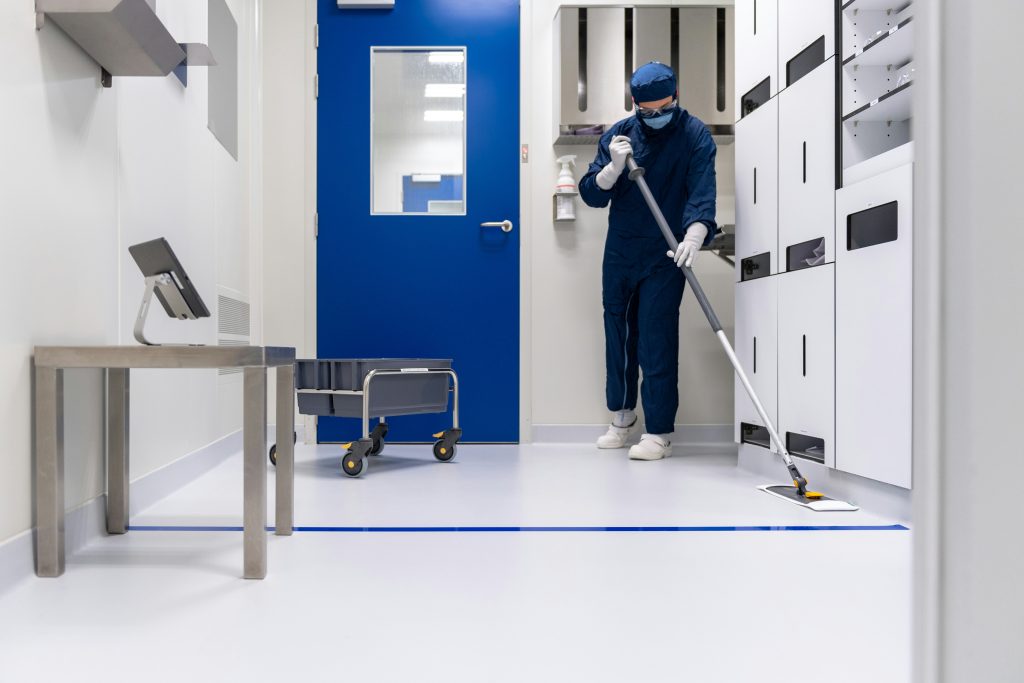
Step 3 — Perform the approved cleaning process
Operators perform cleaning exactly according to the approved SOP.
Step 4 — Record critical parameters
Record relevant cleaning parameters such as:
- Time
- Temperature
- Concentration
- Flow
- Pressure
- Rinse conditions
Step 5 — Perform visual inspection
Equipment is inspected for visible contamination where accessible.
Step 6 — Collect samples
Collect swab, rinse or other approved samples according to the protocol.
Step 7 — Perform laboratory testing
QC analyzes samples using the approved validated or otherwise appropriately qualified analytical method.
Step 8 — Apply recovery correction where applicable
Results are interpreted according to the validated sampling recovery approach.
Step 9 — Compare against acceptance criteria
Each result is compared with the protocol-defined limit.
Step 10 — Review the complete validation package
QA/QC/Validation review the data, deviations, calculations, chromatograms or analytical records, sampling documentation and other relevant evidence.
Step 11 — Approve the validation conclusion
The final report should state whether the predefined acceptance criteria and validation objectives were met.
Practical QC Perspective: What Should the Laboratory Look For?
From a QC perspective, cleaning validation is not just a final numerical result.
The laboratory review should include the complete analytical evidence.
For an HPLC cleaning-validation method, for example, QC should consider:
- Correct method version
- Correct standard preparation
- Standard identity
- Standard potency
- Sample preparation
- Dilution calculations
- System suitability
- Retention time
- Peak identification
- Integration
- Blank interference
- Specificity
- LOQ
- Chromatographic response
- Calculations
- Sample identity
- Recovery correction
- Acceptance criteria
Unexpected peaks should not automatically be ignored simply because the target API result passes.
The laboratory should determine whether the peak represents:
- Previous product
- Degradation product
- Cleaning-agent residue
- Process contaminant
- Solvent/background interference
- Analytical artifact
This is where cleaning validation connects directly with pharmaceutical QC.
Common Cleaning Validation Failure Points
Inadequate worst-case selection
Manufacturers should not select a product as the worst case simply because they manufacture it frequently.
Poor sampling locations
Sampling only easily accessible surfaces can miss the areas most likely to retain residue.
Weak recovery studies
Poor recovery can make a cleaning process appear better than it actually is.
Analytical method not sensitive enough
A method may not be capable of reliably detecting the required residue level.
Uncontrolled cleaning parameters
If operators vary temperature, time, detergent concentration or mechanical action, the validated process may no longer represent routine operation.
Ignoring equipment design
Dead legs, valves, gaskets, hoses and transfer lines can create difficult-to-clean areas.
Treating visual cleanliness as proof of chemical cleanliness
A surface may look clean while containing residues below the visual-detection threshold.
Copying old acceptance criteria
Manufacturers should not automatically carry historical limits forward without reassessing them.
Ignoring dirty hold time
A cleaning procedure validated immediately after production may not perform identically after prolonged residue drying.
Weak investigation of failures
A failed result should trigger a documented assessment rather than prompting analysts to repeat the test until they obtain a passing result.
What Happens If Cleaning Validation Fails?
The site should handle a failed cleaning-validation result through its deviation, investigation, and CAPA systems.
The investigation should consider:
- Sampling error
- Recovery issue
- Analytical error
- Equipment condition
- Cleaning-agent concentration
- Cleaning time
- Temperature
- Operator technique
- Equipment configuration
- Product residue characteristics
- Dirty hold time
- Sampling location
- Method suitability
A repeat sample should not be used simply to replace an original failing result without scientific justification.
The original result remains part of the validation history and should be appropriately investigated.
Depending on the investigation, corrective actions may include:
- Cleaning-process modification
- SOP revision
- Additional operator training
- Equipment modification
- Additional sampling
- Analytical-method improvement
- Revised acceptance criteria where scientifically justified
- CAPA
- Revalidation
Role of Pharmaceutical QC in Cleaning Validation
QC has an important role in the analytical part of cleaning validation.
Typical QC responsibilities may include:
- Developing or assessing analytical methods
- Method validation or verification
- Standard preparation
- Sample analysis
- Recovery studies
- LOD/LOQ assessment
- System suitability
- Data review
- Chromatogram review
- Calculation verification
- OOS/OOT assessment where applicable
- Reporting analytical results
- Supporting investigations
However, cleaning validation is not solely a QC responsibility.
Production, QA, Validation, Engineering and other functions may have defined responsibilities within the pharmaceutical quality system.
Cleaning Validation and GMP
WHO identifies adequate cleaning procedures as an important measure for preventing contamination and cross-contamination. Its validation guidance specifically covers cleaning-validation protocols, sampling, recovery, analytical methods and acceptance criteria.
ICH Q7 similarly requires cleaning procedures to be validated where appropriate and requires cleaning validation to reflect actual equipment-use patterns.
The regulatory expectation is therefore broader than:
“The equipment was cleaned and the sample passed.”
The expectation is that the manufacturer can demonstrate a controlled, reproducible and scientifically justified cleaning process.
Cleaning Validation and HBELs
Health-based exposure limits provide a toxicological basis for assessing the amount of previous product that may be carried into another product without creating an unacceptable health risk.
WHO published TRS 1033 Annex 2: Points to consider when including Health-Based Exposure Limits (HBELs) in cleaning validation in 2021.
HBEL assessment may be particularly important where products have different pharmacological or toxicological profiles.
The cleaning-validation program should therefore connect with the site’s toxicological and quality-risk-management processes.
An HBEL is not simply another laboratory acceptance limit. It is part of the scientific risk assessment used to establish appropriate controls.
Cleaning Validation and the 2026 PIC/S Update
There is an important regulatory development for manufacturers following PIC/S guidance.
PIC/S published PI 006-4 in July 2026. The revised document supersedes the previous cleaning-validation recommendation, PI 006-3, and enters into force on 1 October 2026.
For MedicalBluff readers, this means teams should review cleaning-validation programs against the applicable current regulatory framework rather than rely indefinitely on older cleaning-validation templates.
Companies should always determine which regulatory requirements and guidance documents apply to their specific market and manufacturing authorization.
When Should Manufacturers Perform Revalidation?
Cleaning validation does not necessarily represent a one-time exercise that teams can forget after approval.
Reassessment or revalidation may become necessary following significant changes such as:
- New product introduction
- Product formulation changes
- Cleaning-agent changes
- Cleaning-process changes
- Equipment modification
- Equipment replacement
- Major process changes
- Changes to manufacturing campaign strategy
- Changes in residue characteristics
- Changes in analytical methods
- Significant recurring cleaning failures
- Changes in health-based exposure information
- ICH Q7 also expects manufacturers to monitor validated cleaning procedures at appropriate intervals during routine use.
- The site’s change-control and periodic-review systems should determine when the team needs additional validation evidence.
Cleaning Validation Checklist
Before approving a cleaning-validation study, the following questions should have clear answers:
- Is the equipment clearly identified?
- Is the cleaning SOP approved?
- Are critical cleaning parameters defined?
- Is the worst-case product scientifically justified?
- Are residue limits scientifically justified?
- Has the HBEL/PDE assessment been considered where applicable?
- Are sampling locations risk-based?
- Is the sampling method suitable?
- Has recovery been established?
- Is the analytical method sufficiently sensitive?
- Are LOD and LOQ appropriate?
- Are dirty and clean hold times addressed?
- Is the number of validation runs justified?
- Does the validation program consider microbiological and endotoxin requirements where applicable?
- Does the team properly control deviations?
- Are all raw data and calculations traceable?
- Has QA reviewed the complete validation package?
- Does the final report clearly demonstrate whether the study met the protocol acceptance criteria?
Frequently Asked Questions
What is the main purpose of cleaning validation? + The main purpose is to demonstrate that an approved cleaning process can consistently remove relevant product residues, cleaning agents and other applicable contaminants to predetermined acceptable levels.
Is cleaning validation required for every piece of equipment? + Not necessarily in the same manner for every piece of equipment. The scope should be based on risk, equipment use, process characteristics and applicable GMP requirements. ICH Q7 focuses cleaning validation particularly on situations where contamination or carryover presents significant risk.
Is visual inspection enough for cleaning validation? + Visual inspection plays an important role in cleaning assessment, but it does not provide sufficient evidence for every cleaning-validation situation. ICH Q7 recognizes visual examination while also requiring appropriate analytical evidence where applicable.
What is the difference between swab and rinse sampling? + Swab sampling directly samples a defined surface area and is useful for targeted locations. Rinse sampling collects a rinse solution and can be useful for inaccessible internal surfaces. The sampling strategy should be scientifically justified for the equipment and residue.
Why is recovery important in cleaning validation? + Recovery determines how effectively the sampling technique can remove and recover residue from a surface. Without understanding recovery, the analytical result may not accurately represent the residue present on the equipment.
What Analytical Methods Do Analysts Use in Cleaning Validation? + Depending on the residue, methods may include HPLC, GC, TOC, UV, conductivity, pH or other suitable techniques. WHO specifically identifies chromatographic and other analytical approaches depending on the substance and required specificity.
Is MACO the same for every pharmaceutical product? + No. MACO should be scientifically justified based on the applicable product characteristics, exposure/risk assessment, equipment and subsequent product considerations.
Is 10 ppm a universal cleaning-validation limit? + No. Regulators and manufacturers should not automatically apply a single numerical limit to every product or equipment train. Current risk-based approaches require scientifically justified residue limits.
What is dirty hold time? + Dirty hold time defines the maximum established period between completion of manufacturing and commencement of cleaning during which the cleaning process remains effective.
What is clean hold time? + Clean hold time is the established period between completion of cleaning and subsequent equipment use, supported by appropriate evidence and controls.
What should a cleaning-validation protocol contain? + It should define the objective, scope, responsibilities, equipment, cleaning procedure, critical parameters, product selection, hold times, sampling strategy, recovery studies, analytical methods, acceptance criteria, validation runs, deviations and reporting requirements. WHO specifically identifies these elements in its cleaning-validation guidance.
Bottom Line
The main purpose is to demonstrate that an approved cleaning process can consistently remove relevant product residues, cleaning agents and other applicable contaminants to predetermined acceptable levels.
Not necessarily in the same manner for every piece of equipment. The scope should be based on risk, equipment use, process characteristics and applicable GMP requirements. ICH Q7 focuses cleaning validation particularly on situations where contamination or carryover presents significant risk.
Visual inspection plays an important role in cleaning assessment, but it does not provide sufficient evidence for every cleaning-validation situation. ICH Q7 recognizes visual examination while also requiring appropriate analytical evidence where applicable.
Swab sampling directly samples a defined surface area and is useful for targeted locations. Rinse sampling collects a rinse solution and can be useful for inaccessible internal surfaces. The sampling strategy should be scientifically justified for the equipment and residue.
Recovery determines how effectively the sampling technique can remove and recover residue from a surface. Without understanding recovery, the analytical result may not accurately represent the residue present on the equipment.
Depending on the residue, methods may include HPLC, GC, TOC, UV, conductivity, pH or other suitable techniques. WHO specifically identifies chromatographic and other analytical approaches depending on the substance and required specificity.
No. MACO should be scientifically justified based on the applicable product characteristics, exposure/risk assessment, equipment and subsequent product considerations.
No. Regulators and manufacturers should not automatically apply a single numerical limit to every product or equipment train. Current risk-based approaches require scientifically justified residue limits.
Dirty hold time defines the maximum established period between completion of manufacturing and commencement of cleaning during which the cleaning process remains effective.
Clean hold time is the established period between completion of cleaning and subsequent equipment use, supported by appropriate evidence and controls.
It should define the objective, scope, responsibilities, equipment, cleaning procedure, critical parameters, product selection, hold times, sampling strategy, recovery studies, analytical methods, acceptance criteria, validation runs, deviations and reporting requirements. WHO specifically identifies these elements in its cleaning-validation guidance.
Cleaning validation is a scientific and documented demonstration that a pharmaceutical cleaning process is capable of consistently controlling product residues, cleaning agents and other relevant contamination.
A strong program does not depend on one laboratory result or one universal residue limit.
It combines:
risk assessment + worst-case selection + defined cleaning parameters + hold times + appropriate sampling + recovery studies + sensitive analytical methods + scientifically justified acceptance criteria + complete documentation.
ICH Q7 provides the core GMP expectations for cleaning validation in API manufacturing, while WHO’s validation guidance provides detailed practical expectations for protocol design, sampling, recovery, analytical methods and acceptance criteria.
For manufacturers operating under PIC/S, the revised PI 006-4 becomes effective on 1 October 2026, making it particularly important to keep cleaning-validation programs aligned with the applicable current guidance.
In pharmaceutical manufacturing, the real objective is not simply to prove that equipment is clean.
The objective is to demonstrate, with defensible scientific evidence, that the cleaning process is capable of consistently producing equipment suitable for its intended use.
References
- ICH Q7 — Good Manufacturing Practice Guide for Active Pharmaceutical Ingredients, Section 12.7 Cleaning Validation.
- WHO Technical Report Series No. 1019, Annex 3 — Good Manufacturing Practices: Guidelines on Validation, Appendix 3: Cleaning Validation.
- WHO Technical Report Series No. 1033, Annex 2 — Points to Consider When Including Health-Based Exposure Limits (HBELs) in Cleaning Validation.
- PIC/S PI 006-4 — Recommendations on Qualification and Validation, revised July 2026; effective 1 October 2026.
- ICH Q7 Implementation Working Group Q&A, including cleaning intervals, dirty hold time, acceptance criteria and monitoring expectations.
- WHO Quality Assurance of Pharmaceuticals: A Compendium of Guidelines and Related Materials, Volume 2, 10th edition, 2024.
Medical Disclaimer
This article is for educational and professional information purposes. Pharmaceutical manufacturers should follow the applicable GMP requirements, approved procedures, regulatory expectations, validated methods and quality-system controls governing their specific operations. This article does not replace an approved cleaning-validation protocol, toxicological assessment, site-specific risk assessment or regulatory requirement.