

How Blue Light Affects Sleep — And What You Can Do About It
You’ve heard it before: “Stop scrolling before bed.”
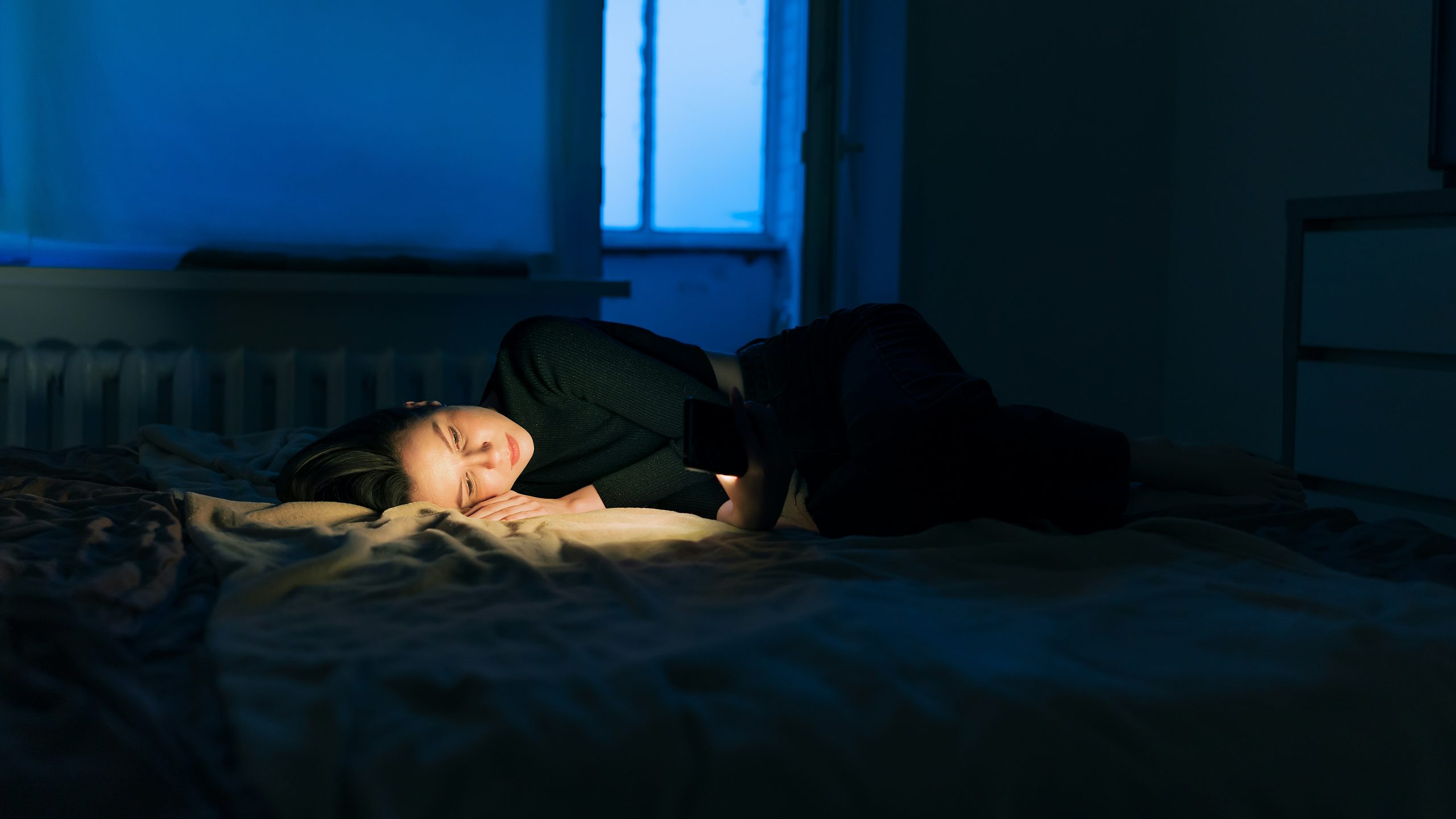
But why? What actually happens when you stare at your phone at 11 PM?
Here’s the science: Your brain thinks it’s still daytime.
And that tiny mistake — repeated night after night — is wrecking your sleep quality, your energy levels, and your long-term health.
Let me explain exactly how blue light affects sleep — and give you 5 simple fixes that actually work.
Quick Summary: Blue Light and Sleep at a Glance
| Concept | What It Means |
|---|---|
| Blue light | High-energy visible light emitted by screens (phones, laptops, tablets, LED lights) |
| Melatonin | The “sleep hormone” — tells your body it’s time to rest |
| Circadian rhythm | Your internal 24-hour body clock |
| Effect of blue light at night | Suppresses melatonin, delays sleep onset, reduces sleep quality |
| Solution | Reduce exposure 1-2 hours before bed + use blue light filters |
Reference: Harvard Medical School. “Blue Light Has a Dark Side.” 2024.
What Is Blue Light?
Sunlight contains all colors of light — red, orange, yellow, green, and blue. Blue light has a short wavelength and high energy .
During the day, blue light is good for you :
-
Boosts attention, reaction times, and mood
-
Regulates your circadian rhythm (keeps you alert when you need to be)
The problem: Screens (phones, laptops, tablets, TVs) also emit blue light — and at night, that artificial blue light tricks your brain into thinking it’s still daytime.
Reference: National Institute of General Medical Sciences (NIGMS). “Circadian Rhythms.” 2024.
How Blue Light Disrupts Your Sleep (The Biology)
When the sun sets, your brain’s suprachiasmatic nucleus (your master clock) sends a signal to your pineal gland: “Start producing melatonin.”
Melatonin is your natural sleep hormone . Rising levels tell your body: “It’s time to wind down. Get ready for sleep.”
Enter blue light:
| Effect | What happens |
|---|---|
| Melatonin suppression | Blue light at night blocks melatonin production by up to 50% |
| Delayed sleep onset | Takes longer to fall asleep (average delay: 30-60 minutes) |
| Reduced REM sleep | Less deep, restorative sleep |
| Morning grogginess | Circadian rhythm shifts later — harder to wake up |
Reference: Chang AM, et al. “Evening use of light-emitting eReaders negatively affects sleep, circadian timing, and next-morning alertness.” Proceedings of the National Academy of Sciences. 2015;112(4):1232-1237.
Real-world data: A 2023 meta-analysis of 50+ studies found that blue light exposure before bed reduced total sleep time by an average of 16 minutes and reduced sleep efficiency (percentage of time in bed actually sleeping) by 4-5% .
Symptoms of Blue Light Sleep Disruption
You might not realize blue light is affecting you. Ask yourself:
| Symptom | Blue light connection? |
|---|---|
| Takes >30 minutes to fall asleep | ✅ Possible melatonin suppression |
| Wake up feeling tired (even after 7-8 hours) | ✅ Possible circadian shift |
| Feel alert at midnight but groggy at 7 AM | ✅ Likely |
| Need caffeine to function before noon | ✅ Likely |
| Weekend “catch up sleep” doesn’t help | ✅ Likely |
Reference: Mayo Clinic. “Sleep disorders: Circadian rhythm disorders.” 2024.
Long-Term Health Effects of Chronic Blue Light Exposure
One bad night isn’t the end of the world. But years of disrupted sleep add up.
| Health Risk | Mechanism |
|---|---|
| Weight gain / obesity | Sleep disruption alters hunger hormones (ghrelin, leptin) |
| Type 2 diabetes | Poor sleep impairs insulin sensitivity |
| Heart disease | Circadian disruption linked to hypertension |
| Depression | Sleep and mood are tightly connected |
| Memory problems | Reduced REM sleep impairs memory consolidation |
| Weakened immune system | Sleep deprivation reduces immune function |
Reference: Centers for Disease Control and Prevention (CDC). “Sleep and Chronic Disease.” 2024.
5 Science-Backed Fixes That Actually Work
You don’t have to throw away your phone. Just change how you use it.
Fix #1: The 1-2 Hour Rule (Most Important)
What: Stop using screens 1-2 hours before bedtime.
Why it works: This gives your brain time to start producing melatonin naturally.
What to do instead: Read a physical book, listen to an audiobook or podcast (eyes closed), stretch, meditate, or talk to family.
Reference: Harvard Medical School. “Blue Light Has a Dark Side.” 2024.
Fix #2: Use Blue Light Filters (Night Mode)
What: Enable “Night Shift” (iPhone), “Blue Light Filter” (Android), or “Night Light” (Windows).
What it does: Shifts screen colors to warmer (red/orange) tones — which don’t suppress melatonin.
When to turn it on: Sunset to sunrise.
Effectiveness: Reduces melatonin suppression by about 50-60% — better than nothing, but not as good as no screens.
Reference: Yale School of Medicine. “Blue Light Filters Help, But Aren’t a Cure.” 2024.
Fix #3: Wear Blue Blocking Glasses
What: Glasses with amber/orange lenses that block blue light wavelengths.
When to wear them: 2-3 hours before bed (even if you’re using screens).
Effectiveness: Studies show blue blockers improve sleep quality in people with insomnia and delayed sleep phase disorder.
Cost: $15-50 on Amazon — worth trying.
Reference: Shechter A, et al. “Blocking nocturnal blue light for insomnia.” Journal of Psychiatric Research. 2020;121:107-113.
Fix #4: Dim Your Lights (All of Them)
It’s not just screens. Overhead LED lights also emit blue light.
What to do:
-
Use dim, warm-colored bulbs in bedrooms (2700K or lower — look for “warm white” on the package)
-
Use lamps instead of overhead lights in the evening
-
Install dimmer switches
Reference: National Sleep Foundation. “Light and Sleep.” 2024.
Fix #5: Get Morning Sunlight (Reset Your Clock)
This might sound counterintuitive — but morning light helps you sleep better at night.
What to do: Get 15-30 minutes of sunlight within 1 hour of waking up (cloudy days count — just go outside).
Why it works: Morning light resets your circadian clock, making it easier to fall asleep at the right time that night.
Reference: Figueiro MG, et al. “Light and sleep in older adults.” Journal of Clinical Sleep Medicine. 2017;13(7):903-910.
How to Build a “Sleep-Friendly” Evening Routine
| Time | Action |
|---|---|
| 2 hours before bed | Stop eating large meals |
| 90 minutes before bed | Dim lights, turn on night mode on devices |
| 1 hour before bed | Put away screens. Read, stretch, listen to calm music |
| 30 minutes before bed | Brush teeth, wash face, prepare for sleep |
| Bedtime | Dark, cool room (65-68°F / 18-20°C). No phone in bed |
The Bottom Line
Blue light at night suppresses melatonin and disrupts your sleep cycle — even if you don’t notice it.
But small changes make a big difference:
-
✅ Put screens away 1-2 hours before bed
-
✅ Use night mode when you can’t
-
✅ Try blue blocking glasses
-
✅ Dim evening lights
-
✅ Get morning sunlight
Your sleep quality affects everything — energy, mood, focus, weight, heart health, immune function.
Don’t let a glowing screen steal your rest.
You may also like:
📖 Air Pollution Effects on Health
📖 The Placebo Effect Explained
📖 Cardiac Arrest vs Heart Attack
Written by Altaf Khan | MSc Chemistry, MBA, QC Manager | Medical Bluff
References
-
Harvard Medical School. “Blue Light Has a Dark Side.” 2024.
-
National Institute of General Medical Sciences (NIGMS). “Circadian Rhythms.” 2024.
-
Chang AM, et al. “Evening use of light-emitting eReaders negatively affects sleep.” PNAS. 2015;112(4):1232-1237.
-
Mayo Clinic. “Sleep disorders: Circadian rhythm disorders.” 2024.
-
Centers for Disease Control and Prevention (CDC). “Sleep and Chronic Disease.” 2024.
-
Yale School of Medicine. “Blue Light Filters Help, But Aren’t a Cure.” 2024.
-
Shechter A, et al. “Blocking nocturnal blue light for insomnia.” Journal of Psychiatric Research. 2020;121:107-113.
-
National Sleep Foundation. “Light and Sleep.” 2024.
-
Figueiro MG, et al. “Light and sleep in older adults.” Journal of Clinical Sleep Medicine. 2017;13(7):903-910.