


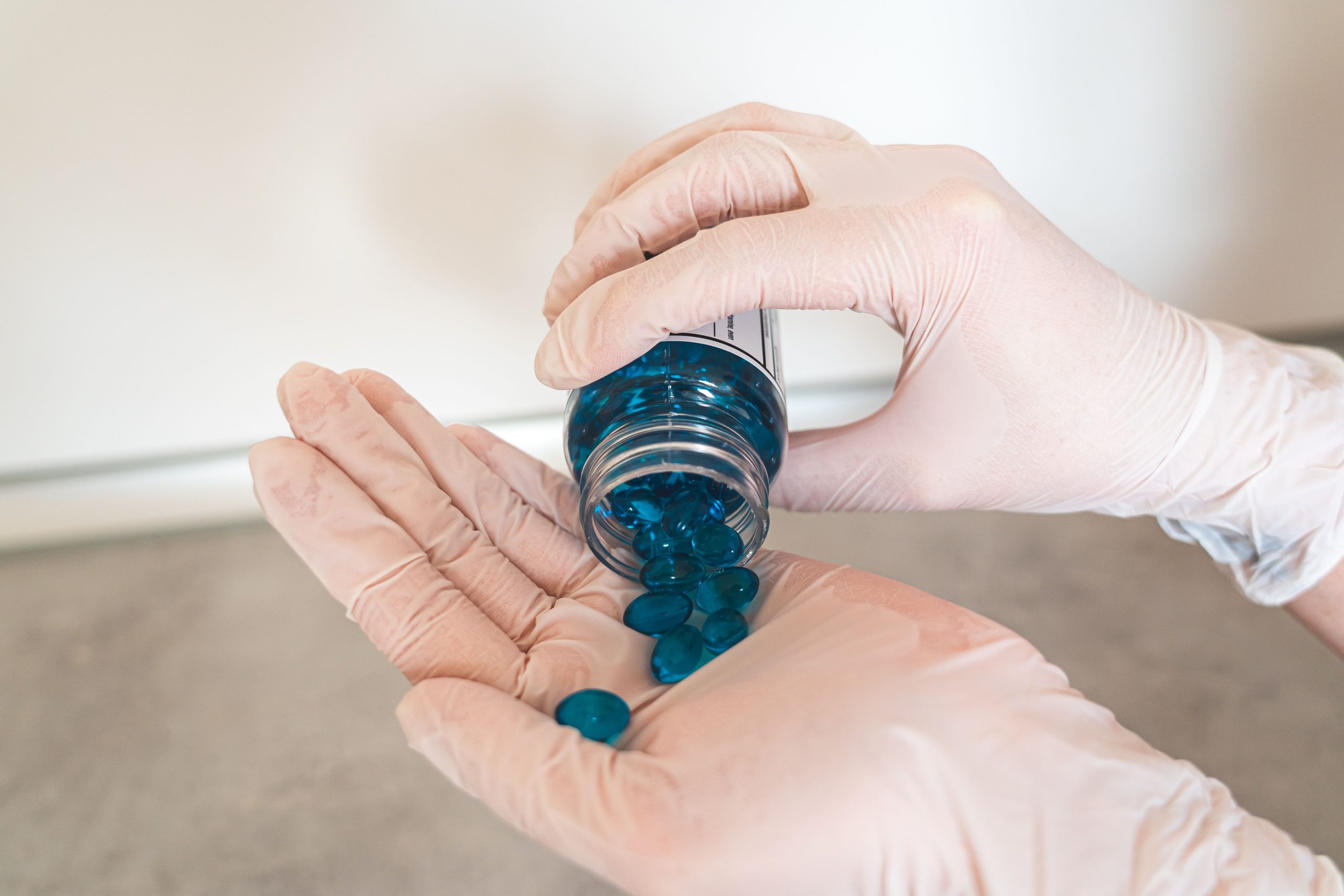
Methylene Blue: Dosage, Gummies, Benefits & Safety (2026 Guide)
A bottle of bright blue liquid doesn’t exactly look like something you’d associate with brain health.
Yet methylene blue has made an unusual journey from chemistry labs and clinical medicine into conversations about brain fog, memory, energy, mitochondria, and biohacking.
That is where things get confusing.
Online, you’ll find everything from claims that it can sharpen cognition to precise-looking dosing charts for “brain optimization.” Gummies and other supplement-style products have added another layer to the conversation.
The chemistry behind methylene blue is real. Some of the research is genuinely interesting. But interesting research and an established treatment are not the same thing.
Methylene blue has a legitimate medical use, most notably for acquired methemoglobinemia. Researchers have also investigated its effects on brain activity and memory. Those findings are worth understanding, but they don’t establish methylene blue as a treatment for everyday brain fog or validate an online dosing protocol.
There is also a serious safety side to this discussion. The compound can interact with certain medicines, and people with G6PD deficiency may face dangerous complications.
So if you’re here because you’re searching for methylene blue dosage, methylene blue gummies, brain-fog benefits, or safety information, let’s separate the chemistry from the hype and established medicine from experimental research.
Quick Answer
Methylene blue is a pharmacologically active compound with an established medical use, but there is no FDA-approved dosage for treating brain fog or enhancing everyday cognitive performance.
Small human studies have produced interesting findings involving memory and brain activity, but the evidence isn’t strong enough to call it a proven treatment for brain fog.
The numbers you see online also need context. A medically established dose for a specific condition is not automatically an appropriate dose for cognitive use. Formulation, concentration, route of administration, and the reason for treatment all matter.
Safety is equally important. The prescribing information warns about serious interactions involving certain serotonergic medicines, while G6PD deficiency is a major contraindication because of the risk of hemolytic anemia.
In short: methylene blue is a real drug with real pharmacology—not simply a blue “brain supplement.”
Quick Summary
| Question | What the evidence tells us |
|---|---|
| What is methylene blue? | A synthetic dye and pharmacologically active compound with a long history in medicine and laboratory science. |
| What is it medically used for? | Its established clinical use includes treatment of acquired methemoglobinemia. |
| Can it improve brain fog? | Cognitive research is interesting, but it has not been established as a treatment for everyday brain fog. |
| Is there a standard brain-fog dose? | No FDA-approved brain-fog dosing regimen exists. |
| What about methylene blue gummies? | A gummy is not automatically equivalent to a prescription formulation and should not be assumed to be risk-free. |
| What are the biggest safety concerns? | Drug interactions, serotonin syndrome risk with certain medicines, and serious risk in people with G6PD deficiency. |
| Should you self-dose it? | No. The appropriate use depends on the indication, formulation, medications, and individual risk factors. |
The molecule itself is fascinating. That doesn’t mean every claim made about it is true.
To understand why, it helps to start with the chemistry.
Methylene Blue Chemistry: How This Redox Dye Works
Methylene blue is a thiazine compound with redox properties, meaning it can gain and lose electrons.
In its oxidized form, it appears blue. When reduced, it forms leucomethylene blue, which is much less colored. The molecule can move between these forms depending on its chemical environment.
That color-changing behavior is one reason methylene blue has long been useful in chemistry and laboratory work.
Why Does the Redox Chemistry Matter?
Biological systems depend on constant electron-transfer reactions, particularly during cellular energy production.
Because methylene blue can participate in redox reactions, researchers have investigated whether it can influence cellular and mitochondrial processes. This is also part of the reason for interest in its possible effects on the brain.
But chemistry alone cannot prove a health benefit.
A plausible mechanism is not the same thing as a proven treatment.
The ability of a molecule to participate in electron-transfer reactions doesn’t automatically mean that taking it will improve mitochondrial function, increase mental energy, or eliminate brain fog. Those claims require evidence from appropriate human studies.
What Is Methylene Blue?
Methylene blue is a synthetic compound that has been used in medicine and laboratory science for more than a century.
Its established medical role is quite different from the way it is often discussed online. It is best known clinically for treating acquired methemoglobinemia, a condition in which abnormal methemoglobin interferes with normal oxygen transport.
In that setting, it is used as a medication—not simply as a dye.
Its pharmacology is also more complicated than its appearance suggests. Effects can depend on the dose, formulation, route of administration, and clinical indication.
Today, you’ll also find it described online as a cognitive enhancer, mitochondrial support compound, or “biohacking” tool.
Some of those ideas come from laboratory research or early human studies. Others go considerably further than the available evidence.
So “what is methylene blue?” has a better answer than simply “a blue dye.”
It is a biologically active compound with legitimate medical applications and areas of ongoing research.
What Does Methylene Blue Do?
The answer depends on how and why it is being used.
In conventional medicine, its established role is treating acquired methemoglobinemia. In this condition, abnormal methemoglobin prevents hemoglobin from functioning normally in oxygen transport. Methylene blue helps restore hemoglobin toward its functional form through a redox process.
Its possible effects on the brain are less certain.
Researchers have investigated its influence on cellular energy pathways, mitochondria, brain activity, and memory. Small human studies have reported changes in brain activity and memory-related performance, which helps explain the growing interest in cognitive use.
But research findings don’t automatically translate into treatment for brain fog, better concentration, or greater mental energy.
The evidence is limited, and studies differ in their participants, doses, designs, and outcomes.
So there are two very different stories:
Established medicine: a recognized therapeutic role for a specific medical condition.
Experimental research: ongoing investigation into neurological, cognitive, and cellular effects.
Keeping those categories separate prevents a promising research finding from being mistaken for a medical recommendation.
Methylene Blue Benefits: What Does Research Show?
The strongest established medical role of this compound is not brain enhancement. Its other proposed benefits—including effects on memory, mitochondrial activity, and neurological function—remain areas of research.
Brain and Memory
A small randomized, placebo-controlled human study involving healthy adults found that a single low dose was associated with changes in brain activity during memory tasks and improved memory-retrieval performance compared with placebo.
That’s an intriguing finding.
It does not establish methylene blue as a treatment for brain fog, nor does it prove that routine use will make someone smarter or more focused.
The study was small, and findings from healthy volunteers cannot automatically be extended to people experiencing persistent cognitive symptoms or neurological disease.
Mitochondrial and Cellular Research
Its redox behavior has also attracted interest from researchers studying cellular energy and mitochondrial function.
Laboratory and experimental work suggests that methylene blue can influence electron-transfer processes under certain conditions. That has encouraged investigation into possible neurological and mitochondrial applications.
But the leap from “may influence a biological pathway” to “improves health when taken as a supplement” is substantial.
What We Can—and Cannot—Say
There is enough scientific interest to justify continued research.
There isn’t enough evidence to describe methylene blue as a proven treatment for brain fog, a general cognitive enhancer, or a cure for age-related cognitive decline.
The fairest conclusion is that it has well-established pharmacology and promising research questions, while many of the benefits promoted online remain unproven in routine human use.
Methylene Blue for Brain Fog: Can It Help?
If you’re dealing with brain fog, you probably aren’t looking for another chemistry lesson.
You want to know whether this compound can actually make a difference.
The honest answer is: we don’t know yet.
The small human study mentioned above makes the idea scientifically interesting. Researchers observed changes in brain activity and better performance on a specific memory-retrieval task after a low dose in healthy adults.
That’s a useful research signal—not proof of a treatment.
There is another complication: brain fog isn’t a single medical diagnosis.
People may use the term when they have difficulty concentrating, feel mentally sluggish, forget things more easily, or struggle to stay focused. Those symptoms can have many possible causes, including poor sleep, stress, medication effects, nutritional problems, illness, and other underlying conditions.
That makes a universal “brain fog dose” particularly difficult to justify.
Why the Evidence Isn’t Enough
Cognitive studies have generally been small and have examined specific outcomes under controlled conditions. They don’t establish that methylene blue is an effective treatment for persistent brain fog in the general population.
There is also a difference between a short-term change measured during a research experiment and a meaningful improvement in everyday functioning.
So if you see a claim that methylene blue is a proven brain-fog treatment, the evidence doesn’t support that level of certainty.
A more accurate description is that it is being studied for effects on brain function and memory, while its role in treating everyday brain fog remains unestablished.
Methylene Blue Dosage: Is There a Standard Dose?
This is where many online discussions become misleading.
You’ll find dosing charts based on drops, percentages, body weight, and various “protocols.” But those numbers don’t necessarily refer to the same formulation, route, or medical purpose.
There is no FDA-approved methylene blue dosage for brain fog, memory enhancement, or general cognitive improvement.
The established medical use is different. Prescription methylene blue has a specific dosing regimen for acquired methemoglobinemia, including weight-based intravenous dosing. That medical regimen should not be repurposed as a cognitive-enhancement dose.
Why Online Dosage Charts Can Mislead
Several factors can change what a stated dose actually means:
- Concentration: A 1% solution and a 2% solution contain different amounts per volume.
- Route: Oral and intravenous administration are not interchangeable.
- Purpose: A dose studied for one medical condition does not automatically apply to cognition.
- Product quality: Online products may differ in purity, formulation, and quality control.
- Patient factors: Medications, medical history, and conditions such as G6PD deficiency can substantially change the safety picture.
A neat-looking “brain fog dosage chart” can therefore create a false sense of precision.
What About Low Doses Used in Research?
Some cognitive studies have used relatively low doses under controlled research conditions.
That is scientifically useful, but it does not establish a routine dose for people who want to treat brain fog themselves.
A research dose answers a research question.
It does not automatically become a treatment recommendation.
Don’t calculate a personal dose from an online chart, drop count, or someone else’s protocol. If methylene blue is being considered for a legitimate medical reason, the appropriate formulation and dose should be determined according to that indication and individual circumstances.
Methylene Blue Gummies: What Should You Know?
Gummies make almost anything look like a conventional supplement.
That’s exactly why some caution is needed here.
A methylene blue gummy is not automatically equivalent to a prescription methylene blue product. Formulation, concentration, manufacturing standards, intended use, and regulatory status can differ.
What Should You Check?
If you encounter a product marketed as a methylene blue gummy, look beyond the front of the package.
Check for:
- The exact amount of methylene blue per serving
- Complete ingredient information
- Serving size and directions
- Manufacturer details
- Available quality or third-party testing information
- What the product is actually intended for
Be especially skeptical of claims that promise to treat brain fog, reverse aging, dramatically improve memory, or “boost mitochondria.”
A confident label isn’t clinical evidence.
Are Methylene Blue Gummies Proven for Brain Fog?
No.
Research involving methylene blue doesn’t automatically validate every formulation sold online. Evidence from a controlled study also cannot simply be transferred to a commercial gummy.
The formulation matters.
So does the concentration.
And so does the quality of the product.
Methylene blue does not become risk-free because it comes in a gummy.
Methylene Blue Side Effects and Safety
The fact that methylene blue is familiar from laboratory work can make it seem less serious than it is.
Inside the body, it is a pharmacologically active compound.
One of the most important safety concerns is serotonin syndrome. U.S. prescribing information carries a boxed warning about this potentially serious reaction when methylene blue is used with certain serotonergic medicines and opioids.
Serotonin Syndrome
Methylene blue can inhibit monoamine oxidase activity. This helps explain why combining it with certain medicines that affect serotonin can become dangerous.
Warnings include combinations involving SSRIs, SNRIs, MAOIs, and certain opioids. Dextromethorphan can also increase concern.
Possible symptoms include agitation, confusion, sweating, rapid heart rate, changes in blood pressure, tremor, muscle rigidity, fever, seizures, and gastrointestinal symptoms. Severe serotonin syndrome can be life-threatening.
This is one reason the compound shouldn’t be treated like an ordinary wellness supplement.
G6PD Deficiency
People with glucose-6-phosphate dehydrogenase (G6PD) deficiency require particular caution.
The prescribing information lists G6PD deficiency as a contraindication because methylene blue can increase the risk of hemolytic anemia.
Other Adverse Effects
Reported adverse reactions can include headache, nausea, diarrhea, electrolyte abnormalities, myoclonus, and neurological effects. Serious hypersensitivity reactions, including anaphylaxis, have also been reported.
Because of its intense color, methylene blue can also interfere with some laboratory tests and discolor urine.
The practical question therefore isn’t simply, “What dose is safe?”
It’s “Is this appropriate for this person, for this purpose, in this formulation, alongside their other medicines?”
For an established medical indication, that decision belongs in an appropriate clinical setting.
Methylene Blue Drug Interactions: What to Know
The biggest interaction concern comes from its effect on monoamine oxidase (MAO).
Combining methylene blue with medicines that increase serotonin can potentially trigger serotonin syndrome, a serious and potentially life-threatening reaction.
Particular attention is needed with:
- SSRIs, including sertraline, fluoxetine, and escitalopram
- SNRIs, including venlafaxine and duloxetine
- MAO inhibitors
- Certain opioid medicines
- Dextromethorphan, found in some cough and cold products
This isn’t a complete list of every possible interaction. The actual risk depends on the medicines involved, formulation, dose, route, and clinical circumstances.
And “natural” doesn’t mean interaction-free.
If you use supplements, nootropics, or other products that affect the nervous system, tell your doctor or pharmacist before using methylene blue.
Don’t Stop Prescription Medicines Yourself
If you’re taking an antidepressant or another prescription medicine, don’t stop it simply because you’re considering methylene blue.
Some medicines need to be tapered, and abrupt discontinuation can create additional problems.
Instead, provide a complete medication list—including prescriptions, over-the-counter products, supplements, and nootropics—to a healthcare professional.
Who Should Avoid Methylene Blue or Get Medical Advice First?
Some people face substantially higher risks and shouldn’t experiment with methylene blue on their own.
G6PD Deficiency
People with G6PD deficiency should not use methylene blue because of the risk of hemolytic anemia. This is specifically identified as a contraindication in prescribing information.
People Taking Certain Medicines
Those taking SSRIs, SNRIs, MAO inhibitors, certain opioids, or dextromethorphan should get professional advice before exposure because of the serotonin-syndrome risk.
Pregnancy and Breastfeeding
Pregnancy and breastfeeding are another reason to avoid self-directed use for an unproven purpose such as brain fog.
There isn’t enough evidence to establish methylene blue as a safe and effective cognitive treatment during these periods.
Children and People With Complex Medical Conditions
Children shouldn’t be given methylene blue as a general cognitive supplement without appropriate medical supervision.
The same principle applies to adults with significant medical conditions, multiple medications, or a history of serious drug reactions.
If persistent brain fog is the reason you’re considering it, investigating the cause may be more useful than adding another compound.
How Much Methylene Blue Is Too Much?
More isn’t necessarily better.
There is no established amount at which a person can safely expect methylene blue to treat brain fog, and increasing exposure doesn’t have a proven cognitive benefit.
Higher exposure can increase the risk of adverse effects. Symptoms of a serious problem may include nausea, headache, dizziness, confusion, agitation, changes in heart rate or blood pressure, tremors, or neurological symptoms.
Another complication is formulation. A dose expressed in milligrams, milliliters, drops, or percentages cannot be treated as interchangeable without knowing exactly what product is being used.
Don’t Copy Someone Else’s Protocol
Online communities often share personal dosing routines.
Those anecdotes aren’t clinical dosing guidance.
A protocol that someone says “worked great” for them may be inappropriate for another person because medications, medical history, formulation, and individual risk factors differ.
If you’ve taken methylene blue and think you’ve taken too much, don’t try to counteract it yourself by taking another substance or changing prescription medicines. Contact a healthcare professional or local poison-control/emergency service, particularly if symptoms are developing.
Don’t increase the dose simply because a smaller amount didn’t produce the effect you wanted.
Brain Fog Has Many Possible Causes
“Brain fog” describes a group of symptoms rather than one specific disease.
Trouble concentrating, forgetfulness, mental fatigue, and difficulty finding the right words can have many causes.
Poor sleep and ongoing stress are common possibilities. Medication effects, nutritional deficiencies, hormonal changes, infections, and other medical conditions can also contribute.
Even dehydration or regularly skipping meals can leave some people feeling tired and mentally sluggish.
For some people, improving sleep and creating a calmer environment may be a more sensible first step than reaching for a cognitive supplement.
Why This Matters
If the underlying problem is poor sleep, a medication side effect, or another treatable condition, taking methylene blue may simply distract from the real issue.
Persistent or worsening cognitive symptoms deserve more attention than a quick supplement fix. A healthcare professional can consider the pattern of symptoms, medical history, medications, and other relevant factors.
Not every episode of forgetfulness requires a medical workup.
But when brain fog persists, the more useful question may be “What is causing this?” rather than simply “What can I take for it?”
Methylene Blue: Medical Use vs. Cognitive Use
The evidence changes dramatically depending on the purpose.
Medical Use
Methylene blue has an established role in treating acquired methemoglobinemia. In that setting, it is used as a medication with a specific indication, formulation, route, and dosing regimen.
That is fundamentally different from taking it because you feel mentally tired or unfocused.
Cognitive Use
Interest in memory, focus, mitochondrial function, and brain health comes largely from laboratory research and relatively limited human studies.
Some findings justify further research, particularly around cellular energy pathways and aspects of memory.
But there is no established FDA-approved indication for using methylene blue specifically to treat brain fog or enhance cognition in otherwise healthy people.
A legitimate medical use doesn’t automatically validate every new use promoted online.
Established medicine and experimental interest belong in two different boxes.
Frequently Asked Questions About Methylene Blue
Can methylene blue help with brain fog? + There isn’t enough clinical evidence to call it a proven treatment for brain fog. Early research involving memory and brain activity is interesting, but it doesn’t establish methylene blue as a treatment for everyday cognitive symptoms.
What is the usual methylene blue dosage? + There is no FDA-approved dose for treating brain fog or improving cognition. Medical dosing depends on the specific indication, formulation, route, and patient.
Are methylene blue gummies safe? + A gummy format doesn’t make methylene blue risk-free. Products can differ in concentration, ingredients, quality, and regulatory status. Anyone considering one should discuss it with a healthcare professional, particularly if taking medication.
Can methylene blue interact with antidepressants? + Yes. It can interact with several medicines that affect serotonin and may increase the risk of serotonin syndrome. Never stop a prescription medicine on your own to use methylene blue.
Who should avoid methylene blue? + People with G6PD deficiency should not use it because of the risk of hemolytic anemia. People taking interacting medicines and those who are pregnant or breastfeeding should also seek professional advice before use.
Is methylene blue FDA-approved for brain fog? + No. Its established medical use is different from the cognitive and brain-fog claims commonly promoted online. Research into potential neurological and cognitive applications is ongoing.
There isn’t enough clinical evidence to call it a proven treatment for brain fog. Early research involving memory and brain activity is interesting, but it doesn’t establish methylene blue as a treatment for everyday cognitive symptoms.
There is no FDA-approved dose for treating brain fog or improving cognition. Medical dosing depends on the specific indication, formulation, route, and patient.
A gummy format doesn’t make methylene blue risk-free. Products can differ in concentration, ingredients, quality, and regulatory status. Anyone considering one should discuss it with a healthcare professional, particularly if taking medication.
Yes. It can interact with several medicines that affect serotonin and may increase the risk of serotonin syndrome. Never stop a prescription medicine on your own to use methylene blue.
People with G6PD deficiency should not use it because of the risk of hemolytic anemia. People taking interacting medicines and those who are pregnant or breastfeeding should also seek professional advice before use.
No. Its established medical use is different from the cognitive and brain-fog claims commonly promoted online. Research into potential neurological and cognitive applications is ongoing.
Bottom Line
Methylene blue is a fascinating compound with a long medical and scientific history. Its redox chemistry has also made it an interesting subject of neurological and cellular research.
But fascinating chemistry doesn’t make it a proven solution for brain fog.
Some early human findings are encouraging, yet there isn’t enough evidence to establish a standard methylene blue dose for improving cognition or treating everyday brain fog. The safety concerns are real, particularly drug interactions and the risk associated with G6PD deficiency.
If you’re experiencing persistent brain fog, look for the reason behind the symptom before reaching for an unproven compound.
And if you’re considering methylene blue anyway—especially while taking prescription medicines—get professional advice rather than copying an online dosing protocol.
The science is interesting. The hype is ahead of the evidence. Knowing the difference is the safest way to approach it.
References
- U.S. Food and Drug Administration (FDA). Methylene Blue Injection — Prescribing Information.
FDA — Methylene Blue Injection Prescribing Information - National Center for Biotechnology Information (NCBI). Methylene Blue — StatPearls.
NCBI Bookshelf — Methylene Blue - Schroeder, et al. Multimodal Randomized Functional MR Imaging of the Effects of Methylene Blue in the Human Brain. Radiology. 2016.
PubMed — Multimodal Randomized Functional MR Imaging of the Effects of Methylene Blue in the Human Brain