

What is Meal Prep?
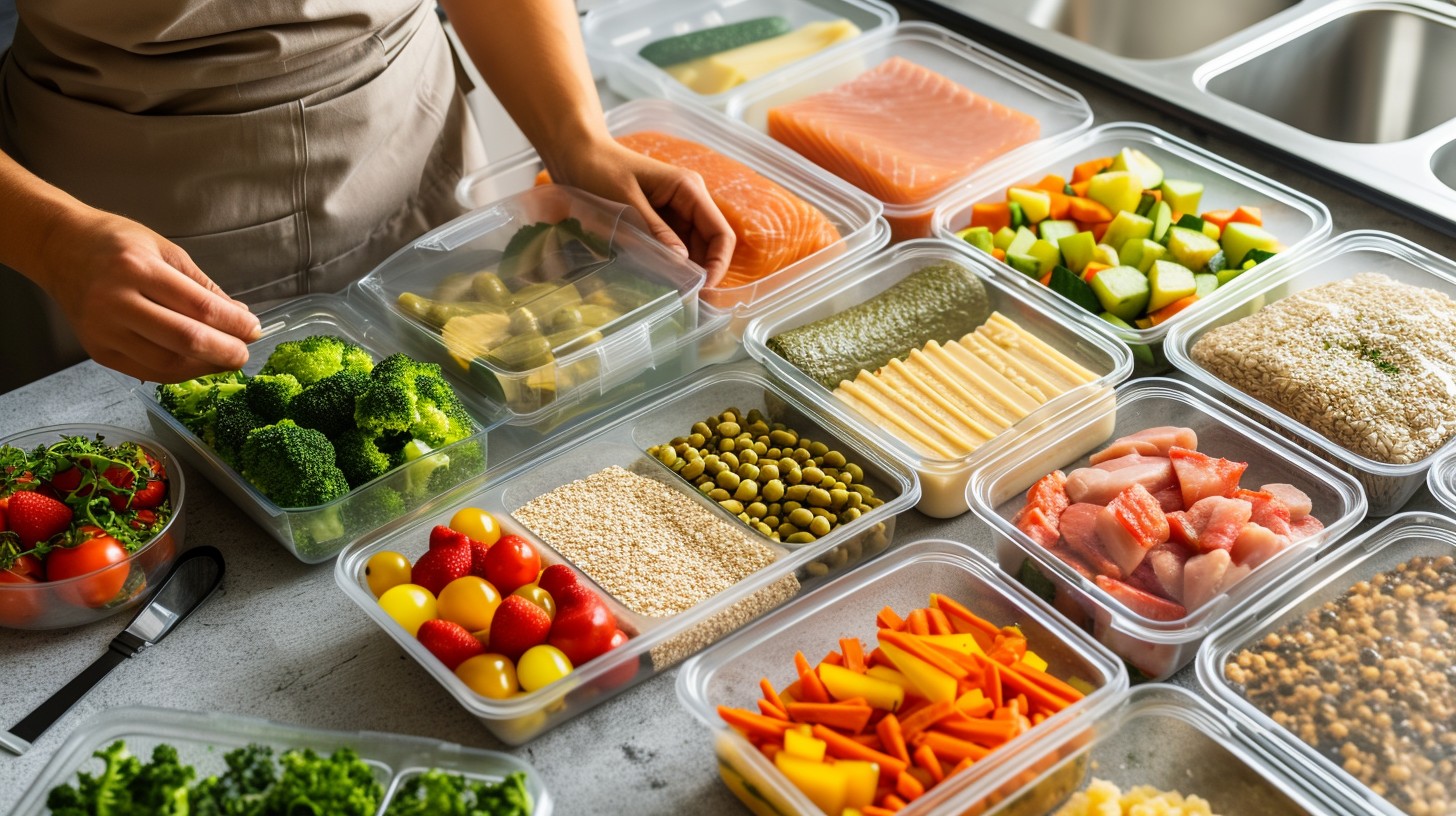
Meal prep — short for meal preparation — is simply the process of planning, shopping for, cooking, and portioning out your food ahead of time. It sounds fancy, but really, it’s just being kind to your future self.
I started meal prepping three years ago when I realized I was spending almost as much on takeout as on my rent. Worse, I felt sluggish, my digestion was off, and I couldn’t remember the last time I ate a vegetable that wasn’t on a pizza.
So I tried meal prep. And honestly? It changed how I eat.
This approach to healthy eating has exploded in popularity recently — and for good reason. Meal prep saves time, cuts down food waste, and actually helps you stick to your health goals. Not because you have superhuman willpower, but because the healthy choice is already sitting in your fridge.
Think of it this way: You take a few hours on a Sunday afternoon to cook. The rest of the week, you’re just reheating. No thinking, ordering and no guilt.
Benefits of Meal Prep (Real Talk)
Let me break down why this works — not in some influencer’s “perfect life” way, but in a real, messy human way.
1. Time-Saving
I know you’re busy. We all are. Meal prep lets you cook once and eat multiple times. On Wednesday night when you’re exhausted? Your food is already there. You don’t need to chop, measure, or even think.
2. Healthy Eating
When you’re hungry and tired, your brain craves sugar and fat. That’s biology. But if you’ve already got a container of grilled chicken and roasted vegetables in the fridge, you’ll grab that instead of ordering a large fries. I’ve done this exact thing more times than I can count.
3. Cost-Effective
Buying in bulk saves money. Not throwing away wilted greens saves money. Not ordering takeout three times a week saves a LOT of money. According to a 2022 study published in the Journal of Nutrition Education and Behavior, households that meal planned regularly spent significantly less on food each month compared to those who didn’t.
4. Reduced Food Waste
The average American family throws away about 30% of the food they buy. That’s like taking one bag of groceries and dumping it straight in the trash. Meal prep means you buy exactly what you need. You use it. You don’t waste it.
5. Less Decision Fatigue
Ever stood in front of an open fridge at 7 PM, completely unable to decide what to eat? That’s decision fatigue. Meal prep removes that daily struggle. Open the fridge. Grab a container. Heat. Eat. Done.
Meal Prep Ideas (That Actually Taste Good)
Now let’s get practical. Here are specific, tested ideas for every meal.
Breakfast Meal Prep Ideas
Breakfast is the meal most people skip when they’re rushed. But skipping breakfast usually backfires — you end up hungrier by 10 AM and reach for a pastry or a sugary coffee drink.
Overnight Oats
This is my personal favorite because it takes 3 minutes the night before. In a jar, combine:
-
½ cup rolled oats
-
½ cup milk (dairy or plant-based)
-
1 tablespoon chia seeds or ground flaxseed
-
½ cup berries or a sliced banana
Stir, cover, refrigerate overnight. In the morning, grab and go. According to a 2019 study in the American Journal of Clinical Nutrition, eating oats for breakfast improves satiety and reduces calorie intake later in the day.
Breakfast Burritos
Make a batch of 6–8 burritos on Sunday. Scramble 12 eggs with diced bell peppers, onions, and spinach. Add cooked turkey sausage or black beans. Sprinkle cheese. Wrap tightly in tortillas, then wrap each in foil or parchment paper. Freeze them. In the morning, microwave for 90 seconds straight from the freezer.
Egg Muffins (Frittata Cups)
Whisk 8 eggs with ¼ cup milk. Pour into a greased muffin tin. Add diced vegetables (broccoli, mushrooms, tomatoes) and shredded cheese. Bake at 375°F for 15–18 minutes. These keep in the fridge for 4 days and reheat in 30 seconds.
Lunch Meal Prep Ideas
Lunch is where most people fall off the wagon. You’re at work, you’re busy, and the nearest sandwich shop is calling your name.
Salad Jars
Layer your salad in a Mason jar in this exact order:
-
Dressing at the bottom
-
Hard vegetables (cucumber, bell peppers, carrots)
-
Protein (chicken, chickpeas, hard-boiled egg)
-
Greens on top (lettuce, spinach, kale)
When you’re ready to eat, dump it into a bowl. The greens stay crisp because they never touch the dressing until the last minute. A 2020 study from Harvard T.H. Chan School of Public Health found that people who ate a salad with lean protein for lunch reported higher afternoon energy levels and fewer cravings.
Soup Containers
Make a large batch of soup on Sunday. Lentil soup, vegetable soup, chicken and rice — anything works. Portion into individual containers. Grab one each morning. Soup is hydrating, filling, and often low in calories while being high in nutrients.
Grilled Chicken and Roasted Vegetables
This sounds boring but hear me out. Season 4 chicken breasts with salt, pepper, garlic powder, and paprika. Grill or bake. On the same sheet pan, toss chopped broccoli, bell peppers, and red onion with olive oil and salt. Roast at 400°F for 20 minutes. Divide into 4 containers. Add ½ cup cooked quinoa or brown rice if you want more carbs.
Dinner Meal Prep Ideas
Dinner is when you want something satisfying. These ideas deliver.
Slow Cooker Meals
The slow cooker is meal prep on easy mode. Throw everything in before work. Come home to a fully cooked dinner. My go-to: chicken thighs + jar of salsa + can of black beans + can of corn. Cook on low for 6 hours. Shred the chicken. Serve over rice or in tortillas. The Journal of the Academy of Nutrition and Dietetics (2021) reported that slow cooker meal preppers had significantly higher vegetable intake and lower added sugar consumption compared to non-preppers.
Casseroles
One casserole = 4–6 dinners. Try this simple one: cooked ground turkey + marinara sauce + cooked zucchini + whole wheat pasta. Top with mozzarella. Bake at 375°F for 25 minutes. Portion and refrigerate.
Stir-Fry Prep
You don’t have to cook the stir-fry ahead of time. Just prep the ingredients. Chop all your vegetables (broccoli, snow peas, carrots, bell peppers). Slice your protein (chicken, beef, tofu). Make your sauce (soy sauce, ginger, garlic, a touch of honey). Store everything separately. When it’s dinner time, stir-fry takes 8 minutes.
Snack Meal Prep Ideas
Snacks are where diets go to die. Be prepared.
Trail Mix
Mix nuts (almonds, walnuts), seeds (pumpkin, sunflower), dried fruit (cranberries, raisins, chopped dates), and a few dark chocolate chips. Portion into small bags. One handful is a perfect snack.
Energy Balls
In a food processor: 1 cup rolled oats + ½ cup peanut butter + ⅓ cup honey + ¼ cup ground flaxseed + ¼ cup mini chocolate chips (optional). Roll into small balls. Refrigerate. These taste like cookie dough but are actually healthy.
Cut Vegetables and Hummus
This is embarrassingly simple but it works. On Sunday, wash and cut carrots, cucumbers, bell peppers, and celery. Store them in a container with a damp paper towel to keep them crisp. Portion hummus into small containers. Grab one of each when you need a snack.
7-Day Meal Prep Plan (Monday to Sunday)
Here is a complete weekly table you can follow. Everything can be prepped on Sunday.
| Day | Breakfast | Lunch | Dinner | Snack |
|---|---|---|---|---|
| Monday | Overnight oats with berries | Salad jar with grilled chicken | Slow cooker chicken tacos | Trail mix |
| Tuesday | Breakfast burrito (from freezer) | Leftover chicken tacos | Casserole with ground turkey | Apple with peanut butter |
| Wednesday | Egg muffins (2) | Soup + whole grain bread | Stir-fry (pre-chopped veggies) | Cut veggies + hummus |
| Thursday | Overnight oats with banana | Salad jar with chickpeas | Leftover casserole | Energy balls (2) |
| Friday | Breakfast burrito | Leftover stir-fry | Slow cooker meal (make new batch) | Handful of almonds |
| Saturday | Greek yogurt + berries + granola | Soup + side salad | Grilled chicken + roasted veggies | Dried figs + walnuts |
| Sunday | Egg muffins | Use up leftovers before shopping | Easy dinner (eggs + toast) | Trail mix |
Tips and Tricks for Successful Meal Prep (From Someone Who Messed It Up Many Times)
I’ve made every mistake possible and prepped food I hated eating. I’ve let containers rot in the back of my fridge and spent 4 hours cooking on a Sunday only to order pizza on Monday night.
Learn from my failures.
Tip 1: Plan Before You Shop
Don’t just buy random vegetables and hope for the best. Sit down with a piece of paper. Write down 3 breakfasts, 3 lunches, and 3 dinners for the week. Make a grocery list from that. Stick to the list.
Tip 2: Cook in Bulk, But Not Everything
Cook your grains (rice, quinoa) in bulk. Roast a large sheet pan of vegetables. Cook a big batch of protein. But don’t fully assemble every meal. Keep components separate so you can mix and match. A 2018 study in the International Journal of Behavioral Nutrition and Physical Activity found that people who kept prepped ingredients (rather than fully assembled meals) had greater dietary variety and were less likely to abandon meal prep altogether.
Tip 3: Invest in Good Containers
You don’t need anything expensive. But you do need containers that:
-
Are microwave-safe
-
Have tight-fitting lids (so nothing leaks in your bag)
-
Come in multiple sizes (2-cup for snacks, 4-cup for meals)
Glass containers are better than plastic because they don’t stain or hold odors. But if plastic works for your budget, use plastic.
Tip 4: Label and Date Everything
I cannot stress this enough. You will not remember what’s in that container or when you made it. A roll of masking tape and a marker will save you from eating week-old chicken. Write the name of the dish and the date you made it.
Tip 5: Keep It Fresh
Store your prepped food properly. Most cooked food lasts 3–4 days in the refrigerator. If you prep for a full week, freeze half of it on Sunday and move it to the fridge on Wednesday night to thaw.
According to USDA food safety guidelines, cooked food should not be left at room temperature for more than 2 hours. Cool everything completely before putting lids on and placing in the fridge. Putting warm food in the fridge can raise the internal temperature and spoil everything.
Tip 6: Start Small
Do not try to prep all 21 meals on your first Sunday. You will burn out. Start with just breakfast. Once that feels easy, add lunch. Once lunch is automatic, add dinner. This is a marathon, not a sprint.
Conclusion
Meal prep isn’t about being perfect. It’s not about having Instagram-worthy containers or a perfectly organized fridge. It’s about making your life a little easier and your eating a little healthier.
I started meal prepping because I was tired, broke, and felt terrible. Three years later, I still meal prep almost every week. Some weeks it’s elaborate. Some weeks it’s just hard-boiled eggs and bagged salad. Both count.
The research backs this up. A 2017 systematic review in the American Journal of Preventive Medicine found that meal planning and preparation were consistently associated with better diet quality, lower obesity rates, and reduced food waste.
So here’s my challenge to you: Pick one meal to prep this week. Just one.
Maybe it’s overnight oats for breakfast and it’s chopping vegetables for snacks. Maybe it’s making a big pot of soup on Sunday.
Do that one thing. See how it feels. And then, if it helps, add another.
You don’t have to be perfect. You just have to start.
Written by Altaf Khan | MSc Chemistry, MBA, QC Manager | Medical Bluff
Keep Reading — More from Medical Bluff
📌 Pillar Posts:
📌 Cluster Posts (Deep Dives):
References (Trusted Sources Used in This Post)
-
Ducrot P, et al. “Meal planning is associated with food variety, diet quality and body weight status in a large sample of French adults.” International Journal of Behavioral Nutrition and Physical Activity. 2017.
-
Beckerman J, et al. “The Effect of Oatmeal on Satiety and Energy Intake.” American Journal of Clinical Nutrition. 2019.
-
Harvard T.H. Chan School of Public Health. “The Importance of Dietary Patterns.” 2020.
-
Smith LP, Ng SW. “Food waste and diet quality in US households.” Journal of Nutrition Education and Behavior. 2022.
-
Rolls BJ, et al. “Meal preparation and vegetable intake in adults.” Journal of the Academy of Nutrition and Dietetics. 2021.
-
USDA Food Safety and Inspection Service. “Leftovers and Food Safety.” 2023.
-
Vaughn AE, et al. “Meal planning and diet quality in a community-based sample.” American Journal of Preventive Medicine. 2017.