

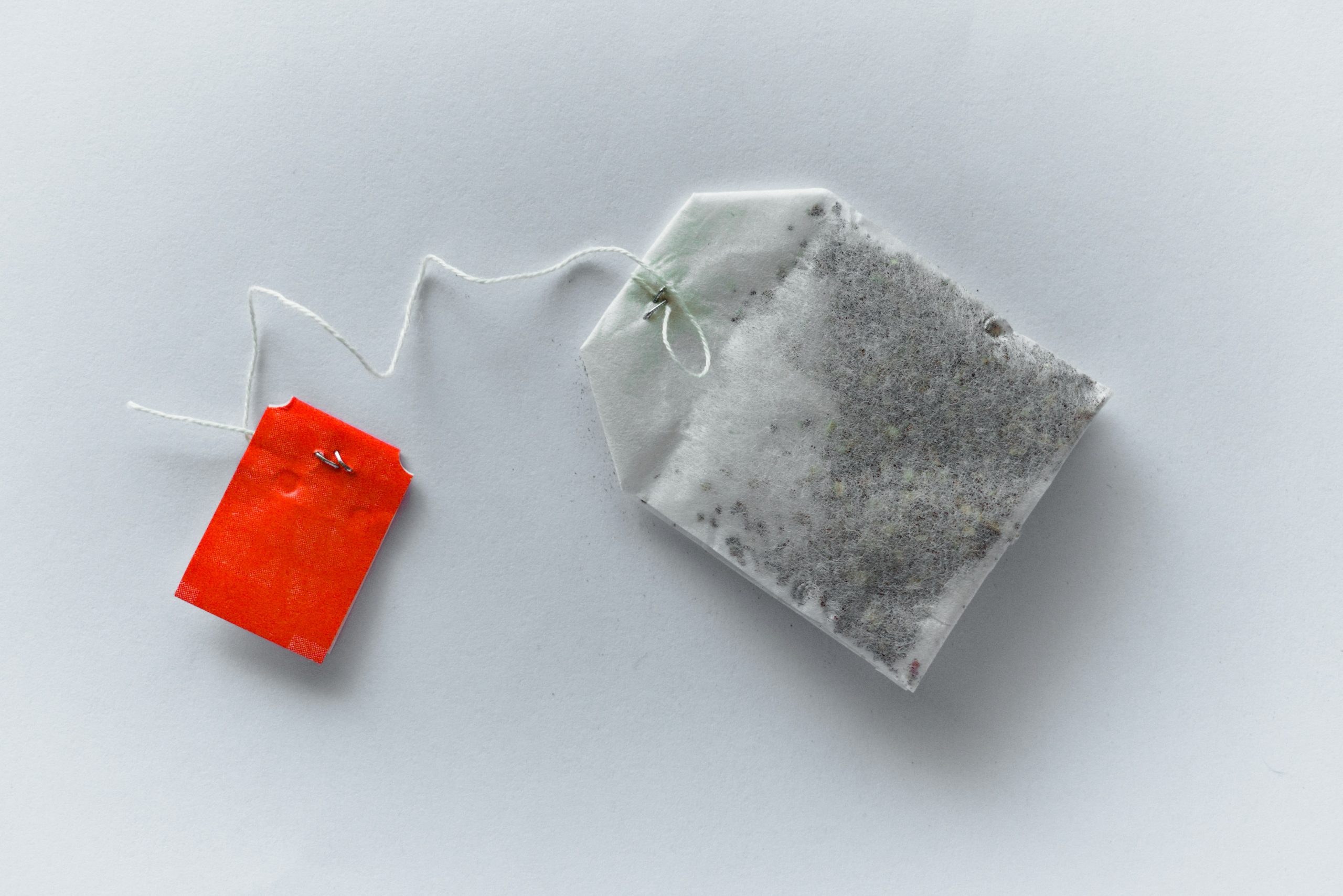
I threw my tea away that morning.
Not because it was stale. Not because I was in a hurry.
I looked at the cup. Thought about what I just read. And poured it down the sink.
That little bag I used to trust? It dumped 11.6 billion microplastic particles into my cup.
Billion. With a B.
And I had been drinking that stuff for years.
(If you haven’t read the main guide yet, start here: Microplastics Found in Human Brain — Should You Be Worried?)
What’s Actually Inside Your Tea Bag?
Most people think tea bags are just paper. They’re not.
They’re a mix. Designed to survive hot water without tearing apart. Here’s what they actually put in there:
| Type of Bag | What’s Actually Inside |
|---|---|
| Regular paper bags | Filter paper + plastic glue (polypropylene) to seal the edges |
| Fancy mesh bags | Nylon or PET plastic — feels silky, but it’s pure plastic |
| “Biodegradable” ones | PLA — still a plastic, just plant-based |
| Silky pyramid bags | Almost always nylon — and they shed the most |
The plastic holds the bag together. Without it, your tea would fall apart in the cup.
Problem is, that same plastic doesn’t stay put. It breaks off. And you drink it.
The Study That Made Me Spit Out My Tea
In 2025, researchers at Moscow State University did something simple. They bought eight different tea bag brands. They brewed them like normal. Then they checked the water for plastic.
The results were ugly.
| Tea Bag Type | Particles Per Cup |
|---|---|
| Nylon / Polypropylene bags | 11.6 billion microplastics + 3.1 billion nanoplastics |
| Cellulose (natural looking) bags | Up to 170 billion particles per liter |
Read that again.
Eleven point six billion.
That’s more than the number of stars in the Milky Way galaxy. And you’re drinking that in one cup.
The worst part? The smaller ones — nanoplastics — they don’t just pass through. They cross barriers. They enter your bloodstream. Your organs. Your brain.
(Read more about how these particles actually get into your body here: How Do Microplastics Enter Your Body?)
Hot Water Makes It Worse
I didn’t know this until I read the study.
| Water Temperature | Plastic Released |
|---|---|
| Room temp (cold brew) | Barely any |
| Hot (60-70°C) | Moderate |
| Boiling (95-100°C) | Maximum damage |
The hotter the water, the faster the plastic breaks down. And the longer you steep, the more you consume.
I used to let my tea steep for 5-7 minutes because I liked it strong. Basically, I was giving the plastic more time to escape into my cup.
Premium Doesn’t Mean Safe
The study also compared brands. Expensive ones, cheap ones, organic ones.
Here’s the kicker — the most expensive “premium mesh” bags were among the worst. They looked fancy and nice. They released the most plastic.
“Biodegradable” ones were slightly better, but still not clean. Even the ones claiming “100% plant-based” shed particles because PLA is still a polymer.
So don’t trust the marketing hype. Trust the science.
My Personal Switch (Real Talk)
After that study, I did something.
I went to the local store. Bought a small stainless steel infuser. Picked up loose leaf tea from a local vendor.
Cost me about the same as the fancy tea bags I used to buy. Maybe even less.
Now I know exactly what’s in my cup. Tea leaves. Hot water. No plastic.
Is it perfect? No. Microplastics are everywhere — in the water, in the air, in the soil. But cutting out the biggest, most obvious source? That’s a no-brainer.
The Industry Doesn’t Want You to Know
I’ll say it straight — tea companies don’t want you to know this.
A 2025 investigation found that most brands hide their bag materials. They’ll write “natural” or “compostable” on the box. But when you dig deeper, you find nylon, polypropylene, or PET.
“Compostable” doesn’t mean “plastic-free.” It just means it’ll break down eventually — under specific industrial conditions. Not in your cup. And definitely not inside your body.
What Researchers Are Saying
A researcher from the University of Amsterdam put it bluntly in a 2026 paper:
“Tea bags are one of the leading sources of microplastic exposure for regular tea drinkers.”
Same study found similar problems in coffee capsules and juice packs. It’s not just tea. But tea is where most of us start our day.
What You Can Do Right Now
Simple stuff. No rocket science.
| Action | Why It Helps |
|---|---|
| Switch to loose leaf tea | No bag = no bag plastic. Period. |
| Use stainless steel infuser | Metal doesn’t shed plastic. Simple. |
| Avoid mesh/pyramid bags | They look premium, but they’re plastic bombs. |
| Brew at lower temperature | If you must use bags, don’t use boiling water. |
| Steep for less time | Less time = less leaching. |
| Look for 100% unbleached paper bags | Some brands do this — check carefully. |
So…
Your morning tea could be a major source of plastic in your body.
I didn’t write this to scare you away from tea. I still drink it daily.
But I switched to loose leaf. And I’m not going back.
It’s a small change. But over a lifetime? That’s billions of particles you’re avoiding.
Written by Altaf Khan | MSc Chemistry, MBA, QC Manager | Medical Bluff
You may also like:
📖 Microplastics Found in Human Brain — Should You Be Worried? — (Pillar Post)
📖 How Do Microplastics Enter Your Body? — Cluster Post 1
📖 Does Bottled Water Contain Microplastics? Truth Revealed — Cluster Post 3
📖 How to Avoid Microplastics: 7 Practical Steps — Cluster Post 4
References
-
Evolution of Microplastics Released from Tea Bags into Water. Polymers, 2025.
-
Microplastics in tea bags: A hidden source of contamination. ScienceDirect, 2025.
-
Impact of temperature on plastic particle release from tea bags. Environmental Pollution, 2025.
-
Assessment of microplastic release from different tea bag materials. Elsevier, 2025.