

Diabetes Management in 2026: New Options Beyond Insulin
If you or someone you love has diabetes, you know the drill.
Check blood sugar. Calculate carbs. Inject insulin. Worry about highs and lows. Repeat.
For decades, this was the only option.
Not anymore.
Diabetes management has changed more in the last 5 years than in the previous 50. In 2026, patients have access to tools that were science fiction a decade ago — and some that don’t require injections at all.
Let me walk you through what’s new, what works, and what’s coming next.
Quick Summary: Diabetes Management in 2026 at a Glance
| Category | What’s New in 2026 |
|---|---|
| Medications | GLP-1s for diabetes + weight + heart + kidney |
| Technology | Smart insulin pens, closed-loop systems |
| Monitoring | Continuous glucose monitors (CGM) are standard |
| Stem cells | First Type 2 diabetes reversal reported |
| Lifestyle | Personalized nutrition based on glucose response |
| Telemedicine | Remote monitoring and virtual endocrinology visits |
Reference: American Diabetes Association (ADA). “Standards of Medical Care in Diabetes — 2026.”
The Big Picture: Diabetes by the Numbers (2026)
| Statistic | Global | United States |
|---|---|---|
| People with diabetes | 537 million | 38 million |
| Undiagnosed cases | ~240 million | ~8 million |
| Prediabetes | ~720 million | ~96 million |
| Healthcare cost (annual) | $966 billion | $327 billion |
Type 1 diabetes: Autoimmune — body doesn’t produce insulin (5-10% of cases).
Type 2 diabetes: Insulin resistance + eventual beta cell failure (90-95% of cases).
Reference: International Diabetes Federation (IDF). “Diabetes Atlas, 11th edition.” 2025.
What’s New in Diabetes Medications (2026)
1. GLP-1 Receptor Agonists (Beyond Blood Sugar)
Drugs like Ozempic, Wegovy, Mounjaro, and Zepbound are no longer “just” diabetes or weight loss meds.
What they do:
-
Lower blood sugar
-
Reduce appetite → weight loss (15-20%)
-
Reduce major cardiovascular events (heart attack, stroke) by ~20%
-
Slow progression of chronic kidney disease
-
Emerging evidence for sleep apnea, arthritis, addiction
Who they’re for: Type 2 diabetes, especially with obesity or heart/kidney disease.
Reference: SELECT trial. New England Journal of Medicine. 2024.
2. SGLT2 Inhibitors (Still Underrated)
Drugs like Farxiga, Jardiance, Invokana.
What they do:
-
Lower blood sugar by excreting glucose in urine
-
Reduce heart failure hospitalizations
-
Slow kidney disease progression
-
Minimal risk of hypoglycemia (low blood sugar)
Who they’re for: Type 2 diabetes with heart failure or kidney disease.
Reference: EMPA-KIDNEY trial. New England Journal of Medicine. 2023.
3. Once-Weekly Insulin (Finally)
For Type 2 diabetes patients on insulin — instead of daily injections.
What’s new: Icodec (insulin once weekly) approved in Europe, under FDA review.
Benefit: 1 injection per week instead of 7-14.
Challenge: Dosing adjustment takes longer.
Reference: Novo Nordisk. “Icodec clinical trial results.” 2025.
Technology Revolution: Diabetes Management in 2026
1. Continuous Glucose Monitors (CGM) Are Now Standard
What they do: A small sensor under your skin measures glucose every 5 minutes. Sends data to your phone.
Benefits:
-
No fingersticks (or very few)
-
See real-time glucose and trends
-
Alerts for highs and lows
-
Share data with doctor or family
Popular devices in 2026: Dexcom G7, Freestyle Libre 3, Medtronic Guardian 5.
Reference: Diabetes Technology Society. “CGM guidelines.” 2025.
2. Hybrid Closed-Loop Systems (Artificial Pancreas)
What they do: CGM + insulin pump + algorithm = automated insulin delivery.
How it works:
-
CGM reads glucose
-
Algorithm predicts where glucose is heading
-
Pump increases or decreases insulin automatically
Result: Much less work for the patient. Time-in-range (70-180 mg/dL) increases from ~50% to ~75%.
Popular systems in 2026: Tandem Control-IQ, Medtronic MiniMed 780G, Omnipod 5.
Reference: Brown SA, et al. “Closed-loop control in Type 1 diabetes.” New England Journal of Medicine. 2019;381:1707-1717.
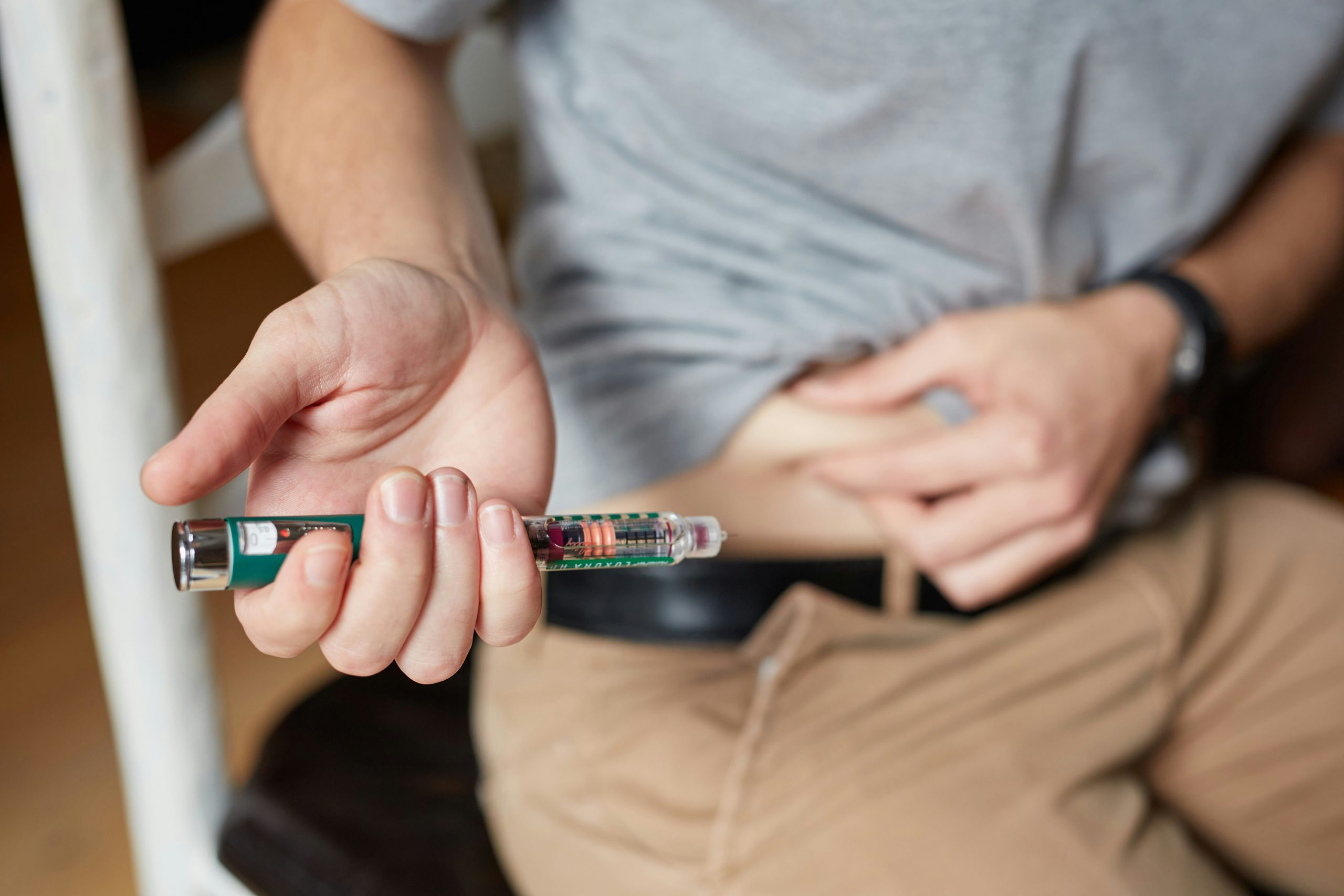
3. Smart Insulin Pens
What they do: Bluetooth-enabled insulin pens that track dose, timing, and temperature. Syncs with phone app.
Benefits:
-
No more guessing “Did I take my insulin?”
-
Dose tracking and reminders
-
Data sharing with doctor
Popular devices in 2026: InPen (Medtronic), NovoPen 6, NovoPen Echo Plus.
Reference: American Diabetes Association. “Smart insulin pen technology.” 2025.
Stem Cell Therapy: The First Type 2 Diabetes Reversal
In April 2024, researchers in China reported the first-ever case of Type 2 diabetes reversal using stem cell therapy.
The patient: 59-year-old man, 25-year history of Type 2 diabetes. Daily insulin injections.
The treatment: Doctors took his own blood cells, reprogrammed them into insulin-producing cells (E-islets), and transplanted them back into his body.
The result: Within 11 weeks, he was off all insulin. As of 2026, he remains drug-free.
Caveats:
-
One patient does not make a cure
-
Currently only available in research settings
-
Type 1 diabetes is different (autoimmune attack on new cells)
Reference: Fang X, et al. “Treating a type 2 diabetic patient with autologous E-islet transplantation.” Cell Discovery. 2024;10:45.
Lifestyle and Personalized Nutrition
1. Precision Nutrition (Based on Glucose Response)
Not everyone responds to food the same way. Two people can eat the same banana — one will have a normal glucose spike, the other a massive spike.
What’s new in 2026: CGM data + AI = personalized food recommendations.
What you learn: Exactly which foods spike YOUR glucose. Eat those foods later in the day, pair with protein/fat, or avoid entirely.
Reference: Zeevi D, et al. “Personalized nutrition by prediction of glycemic responses.” Cell. 2015;163(5):1079-1094.
2. Time-Restricted Eating (Intermittent Fasting)
The evidence: Eating within an 8-10 hour window (e.g., 10 AM to 6 PM) improves insulin sensitivity, reduces blood sugar, and promotes weight loss.
2026 update: New research shows timing matters more than previously thought — early time-restricted eating (eating earlier in the day) is more effective than late eating windows.
Reference: Jamshed H, et al. “Early time-restricted eating for Type 2 diabetes.” JAMA Network Open. 2023.
3. Fiber and Gut Health
The evidence: High-fiber diet (30-40g/day) improves insulin sensitivity and reduces inflammation.
Best sources: Beans, lentils, oats, berries, nuts, seeds, vegetables.
Reference: Reynolds A, et al. “Carbohydrate quality and human health.” The Lancet. 2019;393(10170):434-445.
Diabetes Management by Type
| Strategy | Type 1 Diabetes | Type 2 Diabetes |
|---|---|---|
| Insulin | Always required | Often required eventually |
| CGM | Highly recommended | Recommended (especially if on insulin) |
| Closed-loop system | Best available technology | Emerging (some Type 2 pumps now available) |
| GLP-1 medications | Not approved (but studied) | Highly recommended (if indicated) |
| SGLT2 inhibitors | Not approved (kidney protection studied) | Recommended (if heart/kidney disease) |
| Lifestyle changes | Important but don’t replace insulin | First-line treatment |
| Stem cell therapy | Research only (autoimmune challenge) | First reversal reported |
Emerging Treatments on the Horizon (2026-2030)
| Treatment | Timeline | What it does |
|---|---|---|
| Oral GLP-1s | Some available (Rybelsus), more coming | GLP-1 benefits without injections |
| Dual/triple agonists | Phase 3 trials (retatrutide, survodutide) | GLP-1 + GIP + glucagon — more weight loss |
| Beta cell regeneration | Early clinical trials | Grow new insulin-producing cells |
| Type 1 prevention vaccines | Phase 2 trials | Stop autoimmune attack before it starts |
| Artificial pancreas for Type 2 | Available now (limited) | Fully automated insulin delivery |
The Bottom Line
Diabetes management in 2026 is radically better than 10 years ago.
Key advances:
-
GLP-1s for glucose, weight, heart, kidney
-
CGM for real-time glucose data (no fingersticks)
-
Closed-loop systems for near-automated insulin delivery
-
Stem cell reversal for Type 2 (first case)
-
Personalized nutrition based on your glucose response
You still need the basics: healthy eating, exercise, sleep, stress management.
But the tools available today make successful diabetes management more achievable than ever before.
If you have diabetes: Ask your doctor about CGM (even if you’re not on insulin), GLP-1s (for Type 2 with heart/kidney risk), and smart insulin pens (for Type 1 or insulin-dependent Type 2).
The future of diabetes care is here. Take advantage of it.
You may also like:
📖 GLP-1 Medications: 2026’s Top Health Trend
📖 Health Benefits of Soursop Leaves
📖 The Placebo Effect Explained
Written by Altaf Khan | MSc Chemistry, MBA, QC Manager | Medical Bluff
References
-
American Diabetes Association (ADA). “Standards of Medical Care in Diabetes — 2026.”
-
International Diabetes Federation (IDF). “Diabetes Atlas, 11th edition.” 2025.
-
SELECT trial. New England Journal of Medicine. 2024.
-
EMPA-KIDNEY trial. New England Journal of Medicine. 2023.
-
Novo Nordisk. “Icodec clinical trial results.” 2025.
-
Diabetes Technology Society. “CGM guidelines.” 2025.
-
Brown SA, et al. “Closed-loop control in Type 1 diabetes.” New England Journal of Medicine. 2019;381:1707-1717.
-
American Diabetes Association. “Smart insulin pen technology.” 2025.
-
Fang X, et al. “Treating a type 2 diabetic patient with autologous E-islet transplantation.” Cell Discovery. 2024;10:45.
-
Zeevi D, et al. “Personalized nutrition by prediction of glycemic responses.” Cell. 2015;163(5):1079-1094.
-
Jamshed H, et al. “Early time-restricted eating for Type 2 diabetes.” JAMA Network Open. 2023.
-
Reynolds A, et al. “Carbohydrate quality and human health.” The Lancet. 2019;393(10170):434-445.